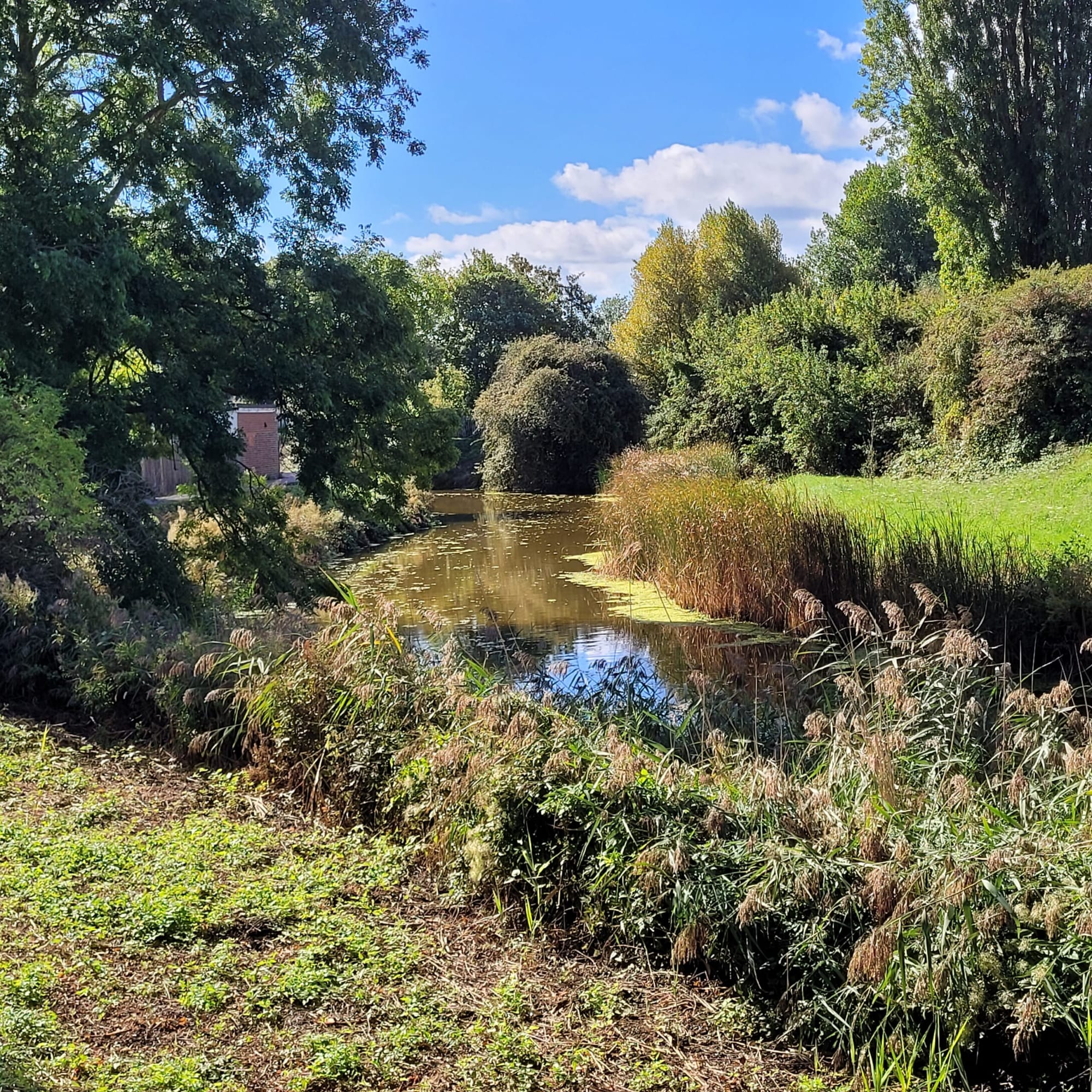
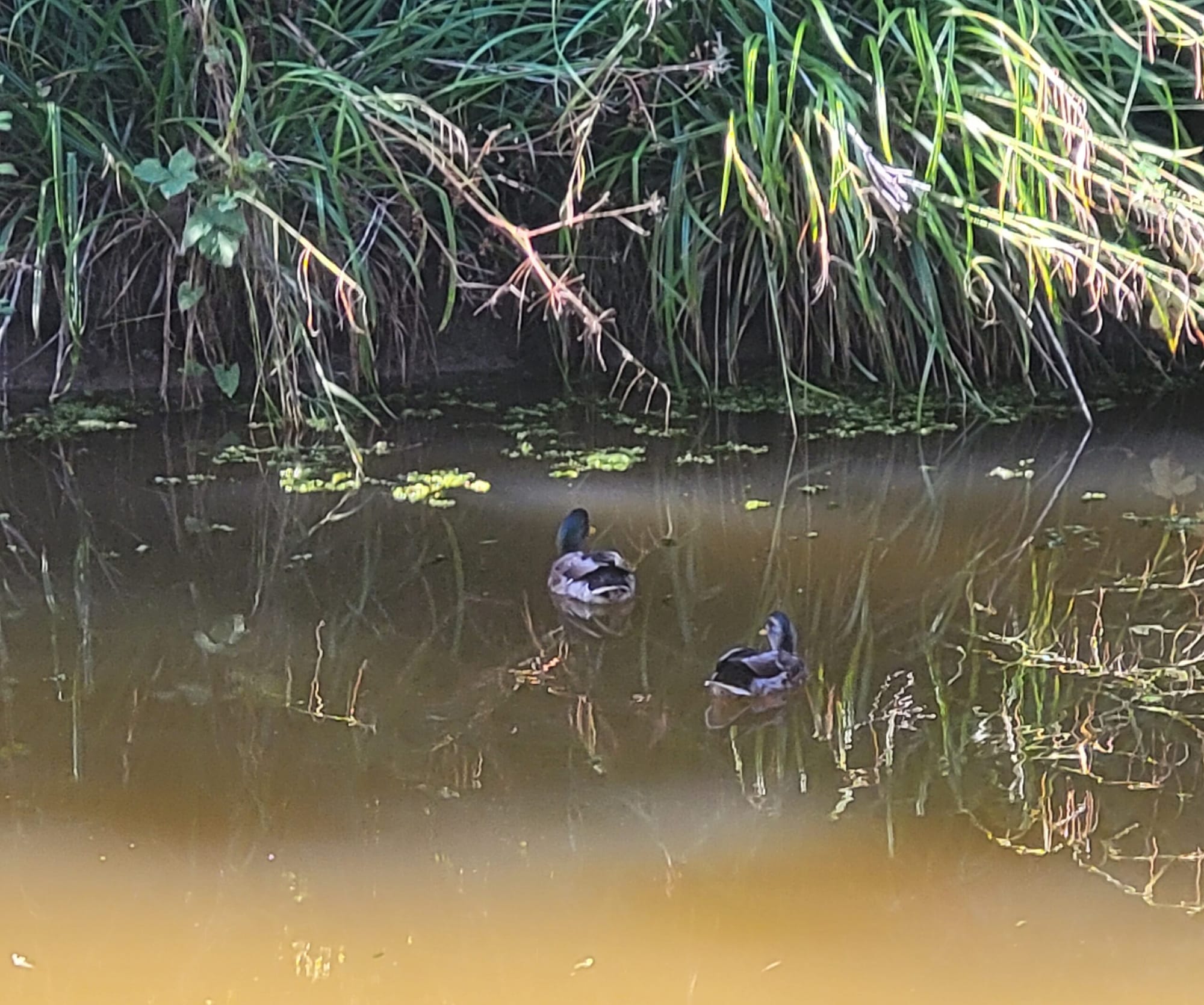
Over the last few weeks there has been a thick layer of aquatic weed covering parts of the river Tillingham particularly between the Ferry Road bridge and Strand Quay sluice. This is because weed and algae grows rapidly in hot weather in slow moving or stagnant water especially when the sluice gates are closed.
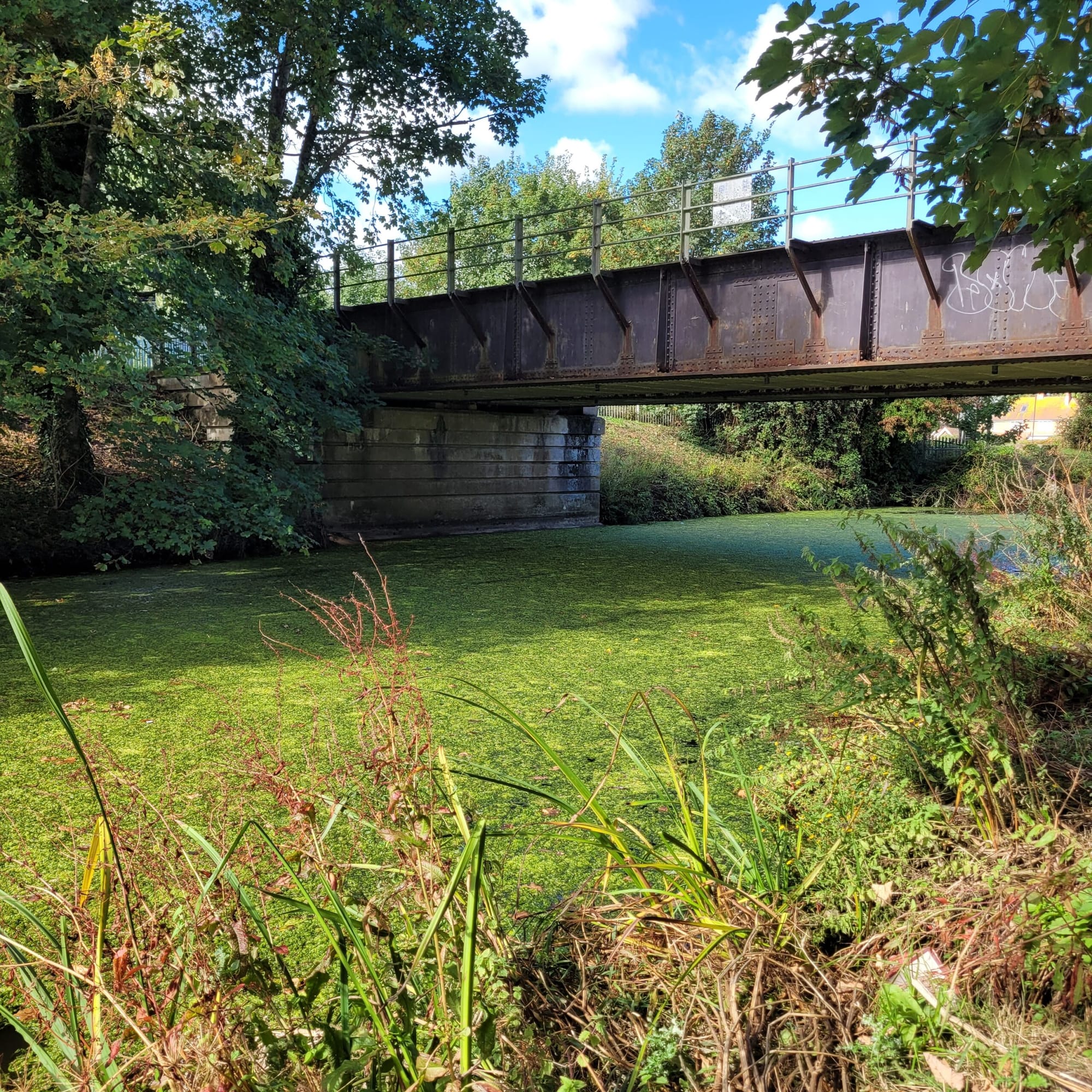
The growth of algae, duckweed and other aquatic weeds can also be accelerated in many rivers when nutrients from agricultural run-off enter the water.
Although weeds supply food for ducks and shelter for aquatic invertebrates, extreme coverage can block sunlight and cause oxygen levels to fall, affecting fish and causing organic matter to decompose resulting in spikes in ammonia, toxic to aquatic life. The thick weed can make it difficult for ducks and waterbirds to move about to feed, and plastics and litter can get trapped on the surface.
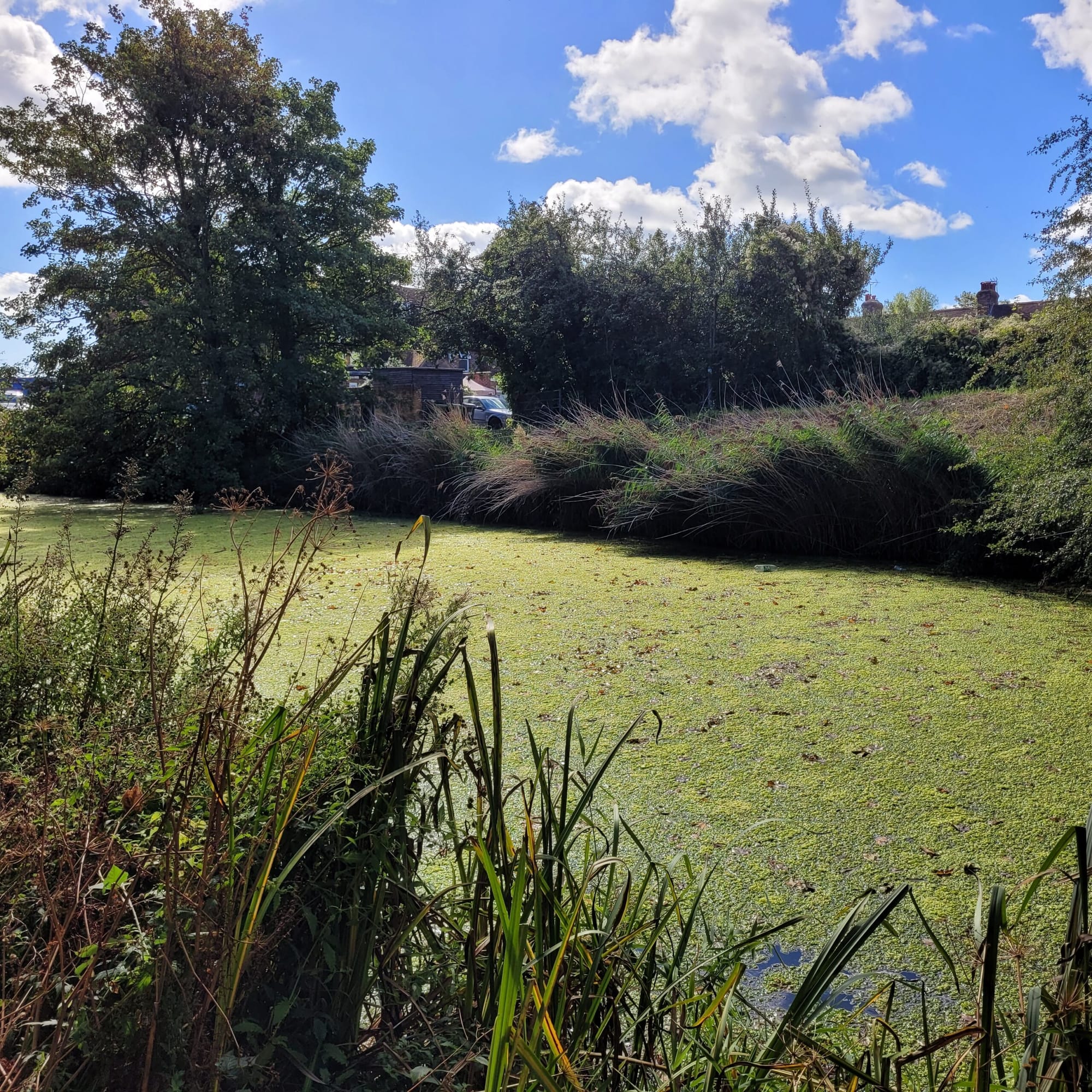
River Tilllingham from the railway bridge to Strand Quay sluice covered in aquatic weed.
After the heavy rain of 8 September some of the weed had been dispersed although the area around the railway bridge and sluice gates remained thickly covered.
An Environment Agency spokesperson said:
"Low river flows are expected during periods of prolonged dry weather and our officers have been cutting the weeds that have grown on the upper reaches of the river as a result of this.
"We are continuing to monitor the environmental impacts on waterways across the South East and are working closely with local authorities, water companies and the government to tackle these issues together.
"We have not received any reports of fish in distress but our officers stand ready to act and we encourage members of the public to report any concerns to our incident hotline on 0800807060."