One of the most immediately noticeable things in Rye, resulting from the nationwide coronavirus lockdown, is the sudden dearth of day-trippers and the compounding parking problems.
Parking provision in Rye might seem a fairly recent phenomenon but, in a town built as a bustling medieval port designed for shanks' pony and the horse and cart, the advent of the internal combustion engine very quickly created problems. Nearly a hundred years ago, parking was already causing difficulty for townsfolk and visitors alike.
One such instance, in the early 1930s, beautifully reflects the character of Rye resident Lady Una Troubridge who, with her Eton crop hairstyle and monocle, was an instantly-recognisable and familiar figure in and around town.
"Please do not park outside my house"
Finding a day-tripper’s car parked outside her home, the Black Boy, she stuck a message on the windscreen which read: “Please do not park outside my house, The Lady Una Troubridge.”
She had gained her title in 1919 when her estranged husband, Admiral Troubridge, had been knighted. Technically, putting ‘the’ before Lady is usually reserved for someone married to a baron or higher.
Troubridge shared her home with her lover Radclyffe Hall, writer of the landmark novel of lesbian love, "The Well of Loneliness". Hall had been born Marguerite Radclyffe Hall but dropped her first name to create the androgynous-sounding Radclyffe Hall as a nom de plume. She was, however, known to her friends simply as ‘John’.
Hall dressed in men’s clothing (she is said to have owned ninety-four neckties), smoked a pipe and her hair was cut at the gentleman’s hairdressers Truefitts of Bond Street. When in Rye, a tailor would come from Brighton to measure her for bespoke smoking jackets and suits. It’s small wonder that the local children thought she was a man.
But what brought Hall to Rye?
Soon after its publication in 1928, her lesbian novel attracted the attention of the editor of The Sunday Express who waged a campaign against it in the newspaper’s columns. In an article entitled ‘A Book That Must Be Suppressed’, he wrote: “I would rather give a healthy boy or healthy girl a phial of prussic acid than this novel.”
This, despite its only references to same-sex love being “she kissed her full on the lips, as a lover” and “that night they were not divided.”
Hall’s novel soon found itself in the dock on a charge of obscenity in a high-profile trial at Bow Street. Eminent writers of the day came to its defence, including household names such as George Bernard Shaw, Vita Sackville-West and HG Wells. Authors Virginia Woolf and EM Forster even attended the trail ready to act as witnesses for the defence if necessary, though neither was ever called to the stand.
All their efforts were to no avail. The book was banned and the chief magistrate ordered all existing copies to be destroyed. The publisher appealed and lost. It was not until 1949 - six years after Hall’s death - that this ban was finally lifted and the novel republished.
During the trial, Hall and Troubridge would motor down from London to Rye to escape the publicity and here they found solace and – apparently – parking spaces and had bought a property within less than two years.
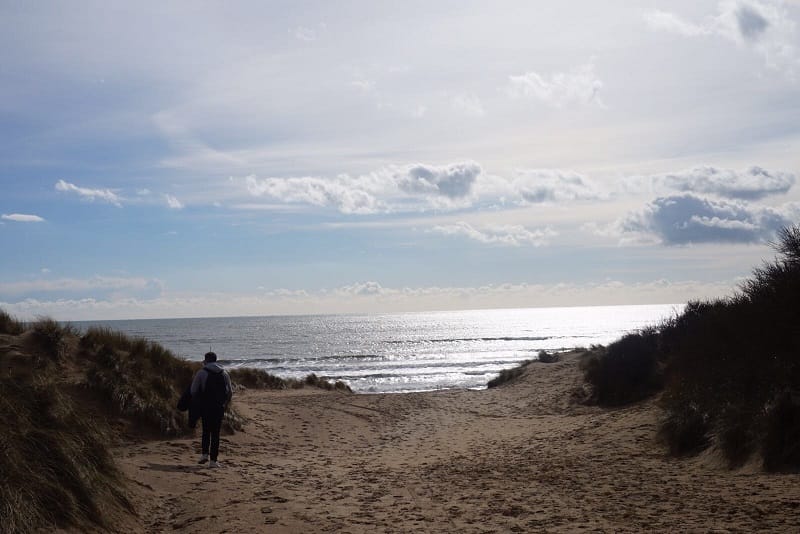
They would walk their dachshunds on Rye Marshes and Camber Sands sometimes in the company of their friends, the Smallhythe ménage à trois, theatre director Edith (Edy) Craig and her lovers the writer Chris St John and artist Tony Atwood, whom Hall and Troubridge affectionately referred to as “The Old Trouts” because - despite what their names might suggest - all three were women.
Hall often walked alone, though, when looking for inspiration. It has been said by one of her biographers that “one of Radclyffe Hall’s most intense relationship was her relationship with Rye.”
The masts of moored boats moving gently
Her love of the town is clearly evident in her 1936 novel, 'The Sixth Beatitude', in which she captures the unique beauty of the area: it roof-tops blazing in the sunset, the cobble stones shining in the rain after a storm, the masts of moored boats moving gently in the tidal flow of the River Rother.
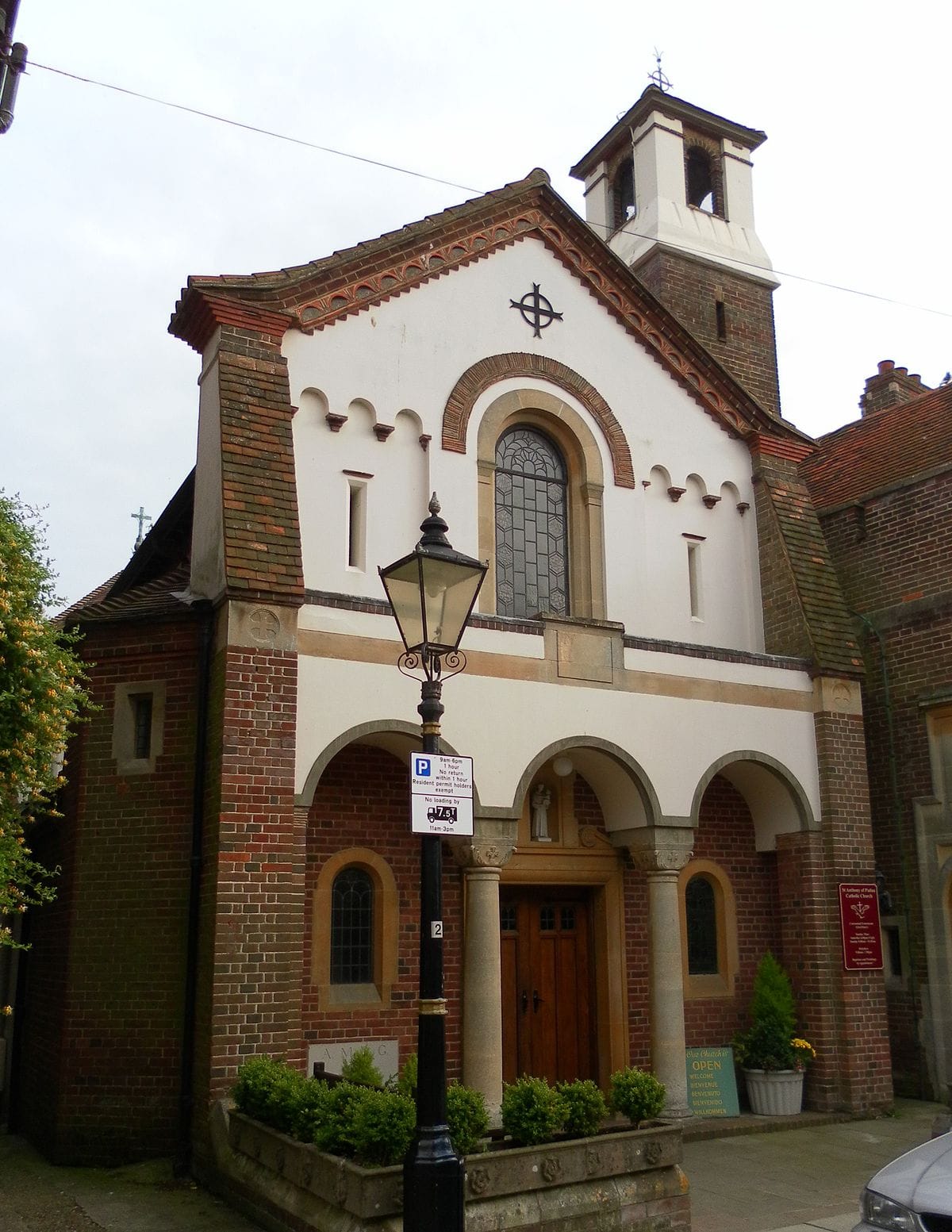
As well as leaving a loving portrait of Rye in her writing, Hall left another legacy through her involvement with the Catholic church of St Anthony of Padua in Watchbell Street, having converted to Catholicism in 1912. She donated some of her substantial fortune to its rebuilding in the late 1920s, providing funds for the roof, pews and the striking Byzantine Rood Cross of Christ the King that still hangs above the altar.
Another aspect of the current lockdown, in the addition to the freeing up of parking spaces, is being left to our own devices for entertainment and diversion. It is a challenge which the fascinating and larger-than-life characters of Radclyffe Hall and her partner Una, Lady Troubridge would have been more than equal to.
- The Black Boy, incidentally, was named by Troubridge after the swarthy King Charles II who was supposed to have stayed there.