The 200th anniversary of the birth of the railways and the 174th anniversary of the Hastings and Rye to Ashford South Eastern line was celebrated at Rye railway station on February 13.
This week, Rye News celebrates the story of the line through engravings and photos from Rye museum's collection of images.
The London to Ashford South Eastern line was completed in 1843 with plans to extend it to Hastings via Rye. However work did not start on the extension until 1846 due to a dispute between the London and Brighton Railway and South Eastern Rail about who was to build it. At the same time the Harbour Commission was concerned about building a swing bridge over the river Rother. In order to placate opposition it was agreed that a railway bridge at Landgate would be built over the line and the huge sum of £10,000 (equivalent to £1,154,000 in 2023) was given to the Harbour Commission for harbour works. The estimated cost of the railway was set at £250,000 (equivalent to £29 million in 2023).
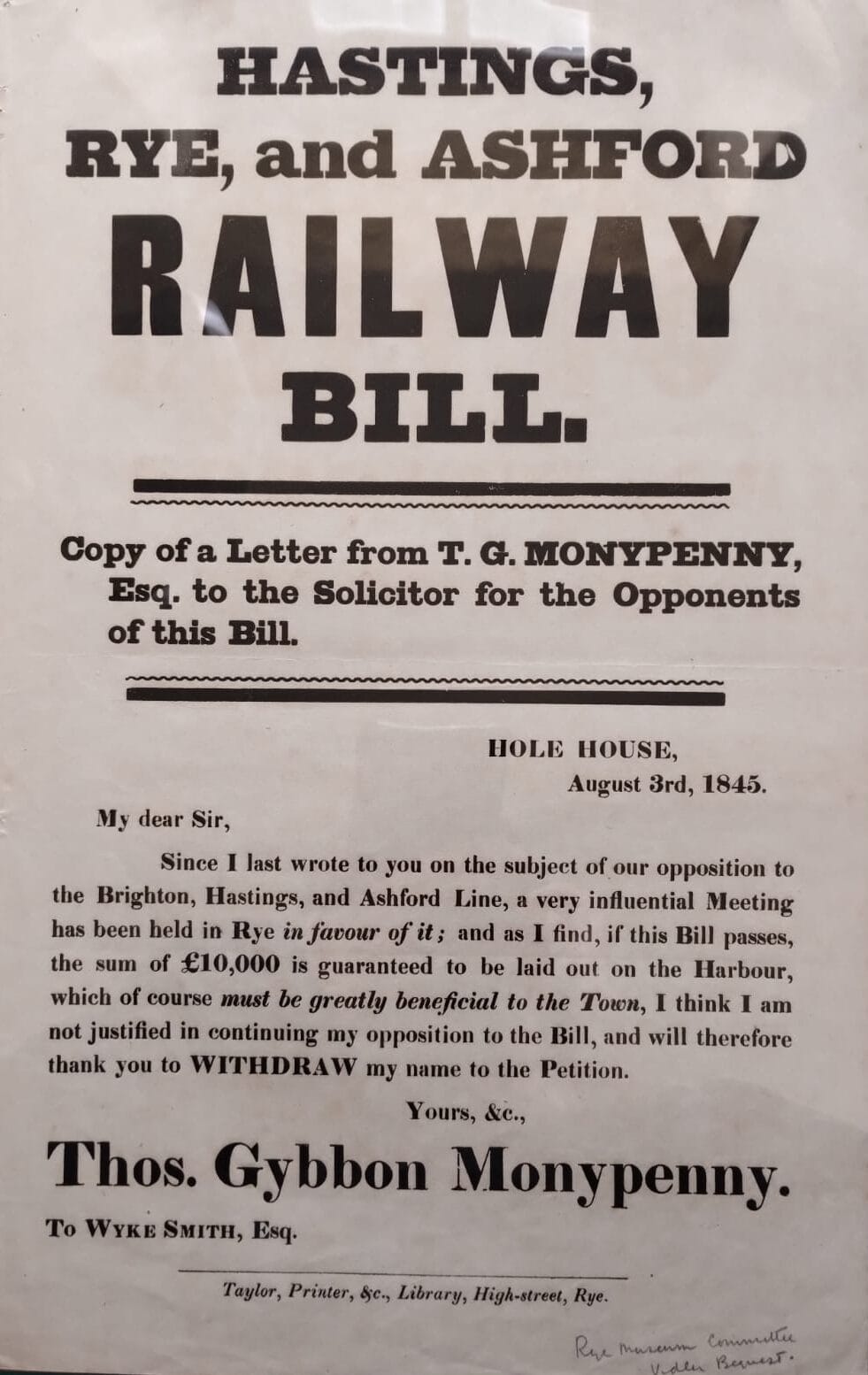
As part of the agreement the Rye Corporation persuaded the railway company to build a bridge at Landgate. This meant that a row of alms houses had to be demolished to make way for it, but South Eastern Rail built some on Military Road to replace them (these have since been demolished in turn).
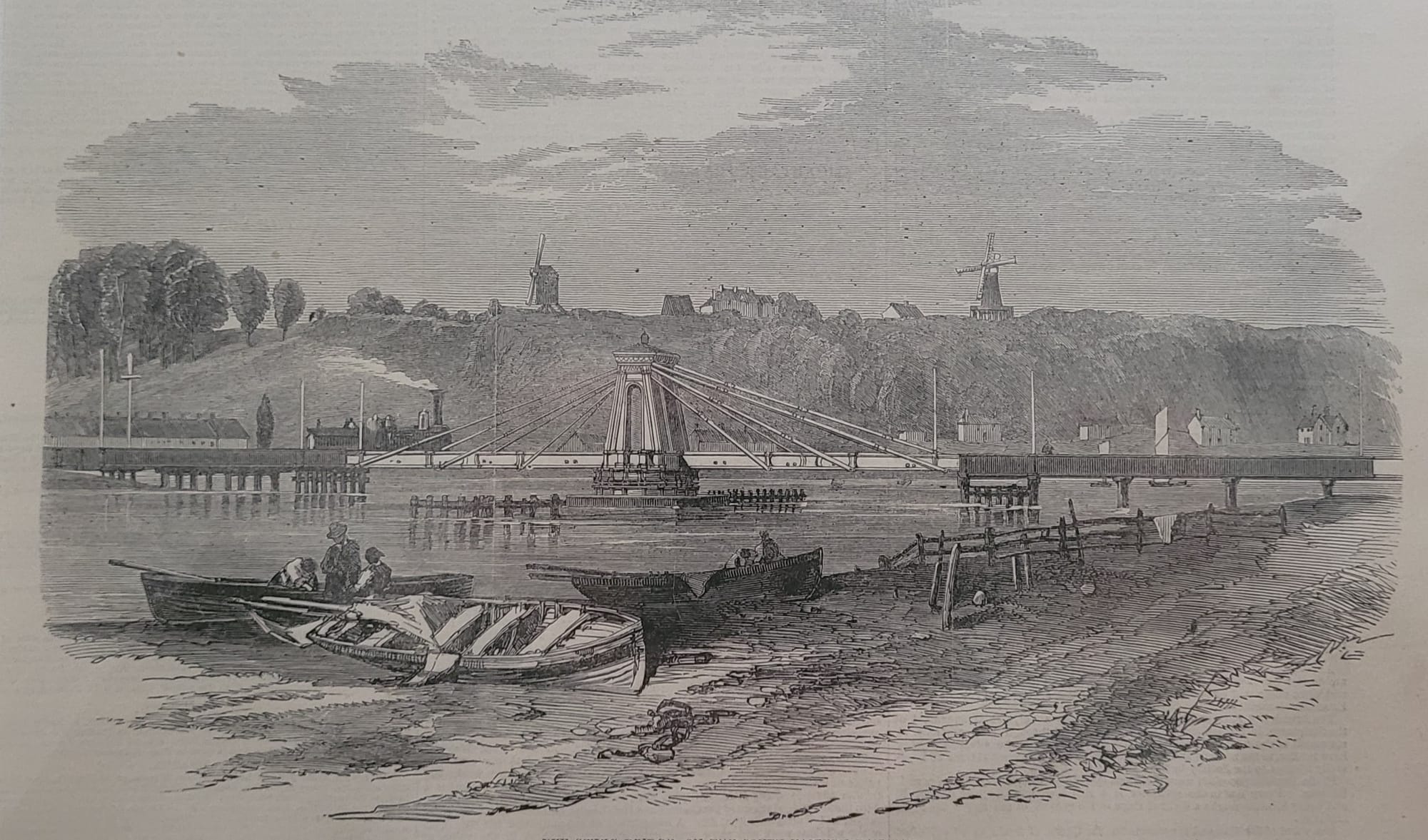
The swing bridge was built in 1851 to enable fixed masted boats to pass along the river. Two men could easily open it in around two and half minutes. This print of 1851 shows the bridge over the Rother with an early engine crossing the single track.
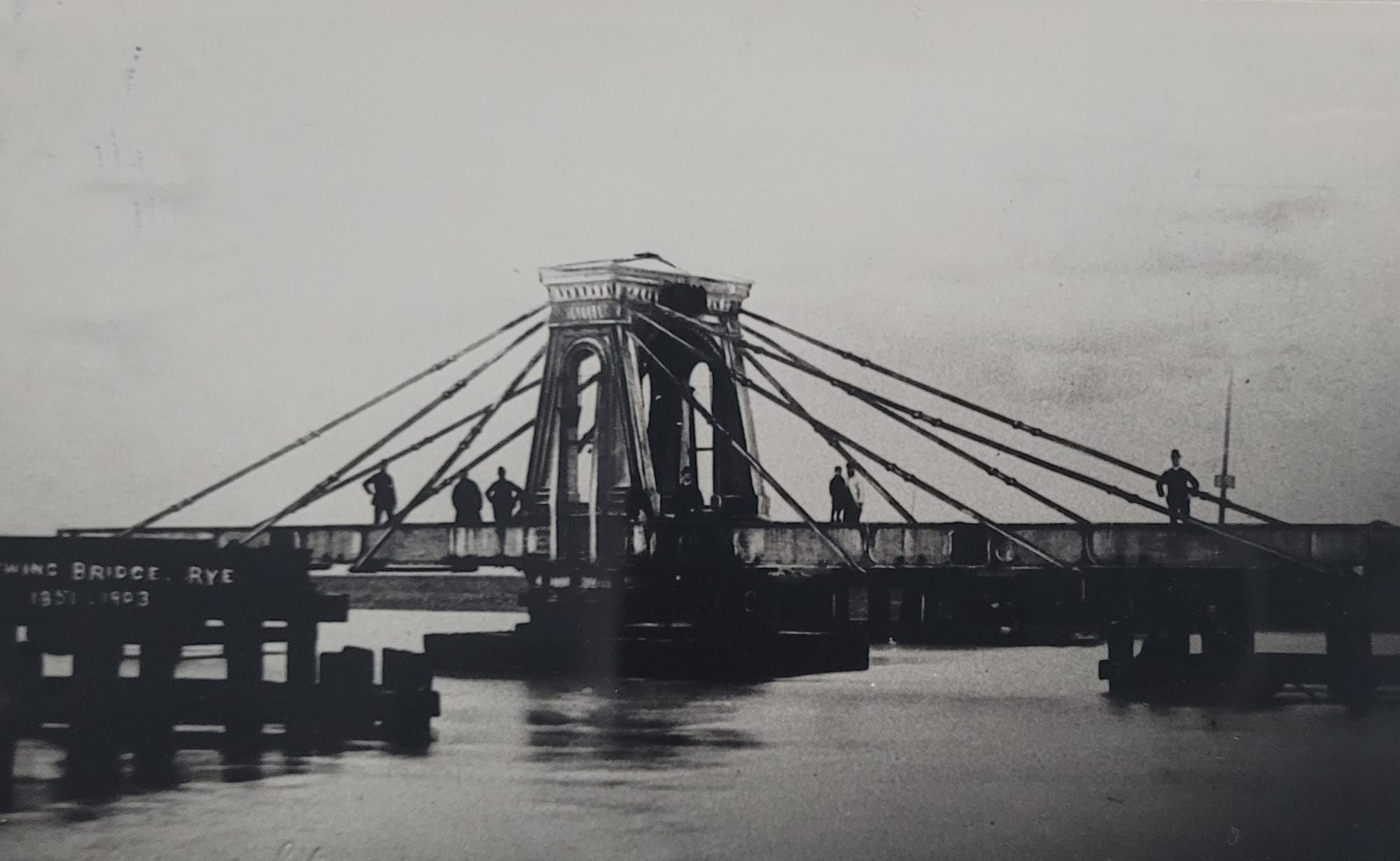
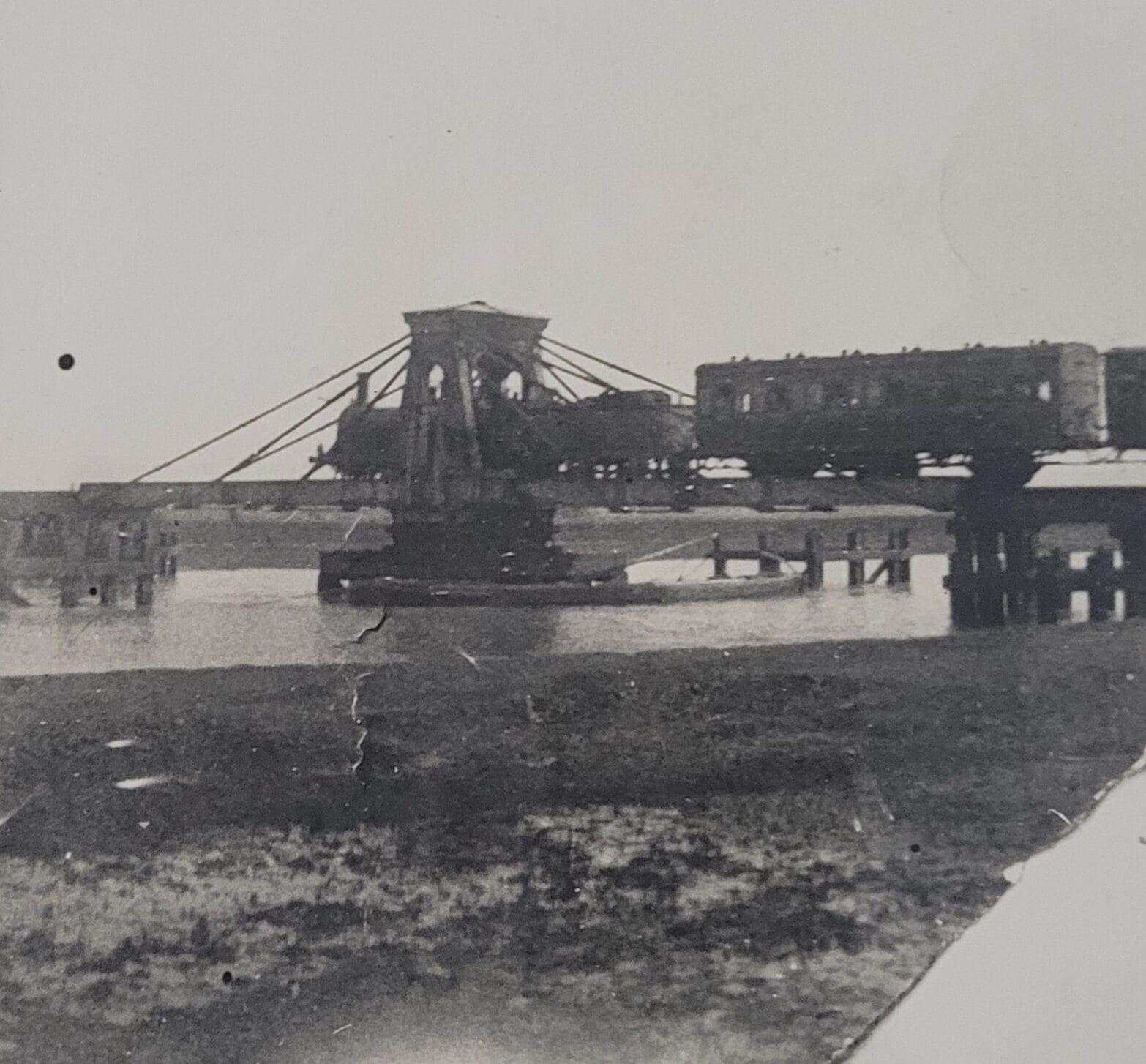
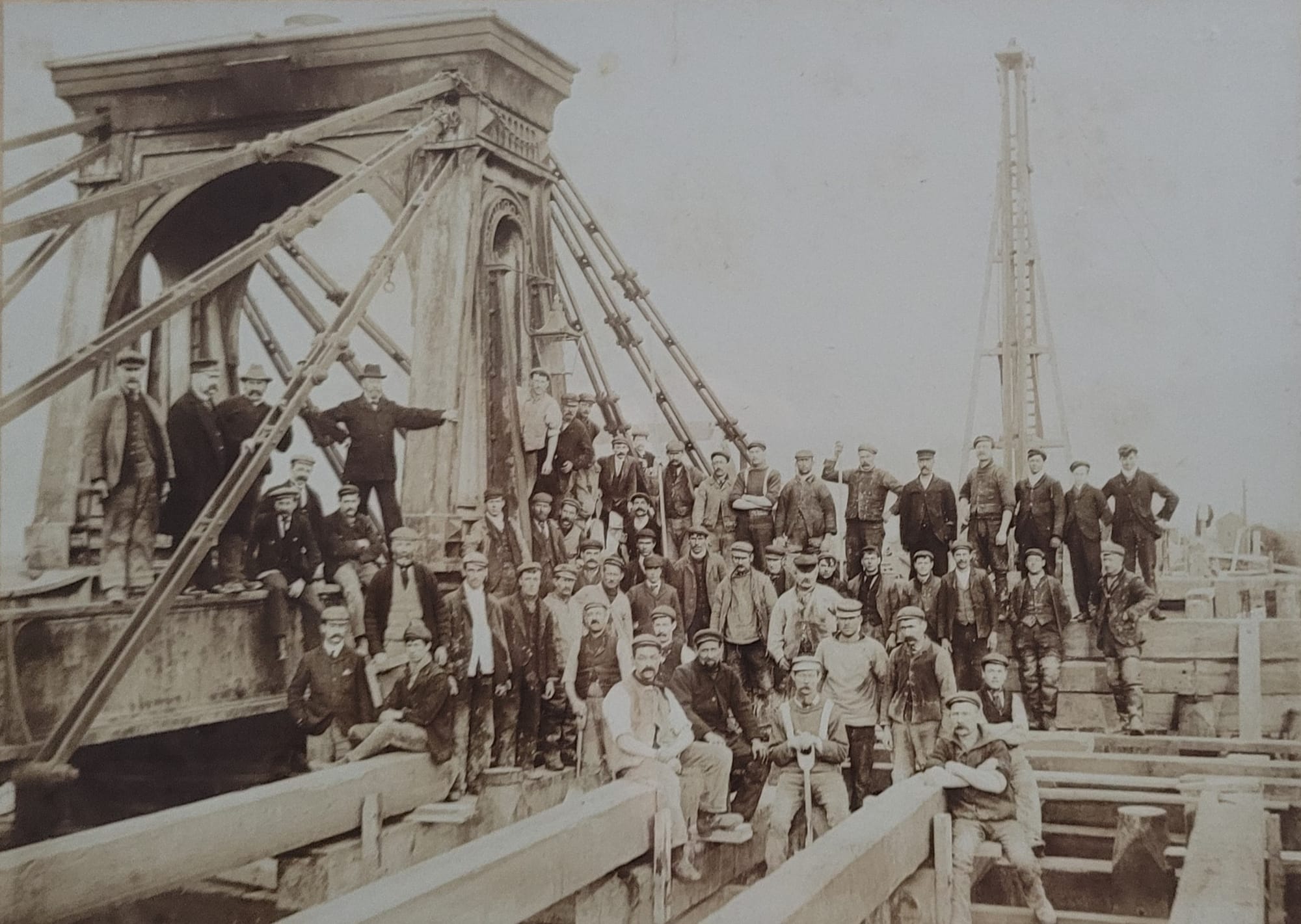
This picture shows the team who were building the new bridge for two rail tracks, before dismantling the old swing bridge over the river Rother, Rye. The new rail bridge was opened in 1903.
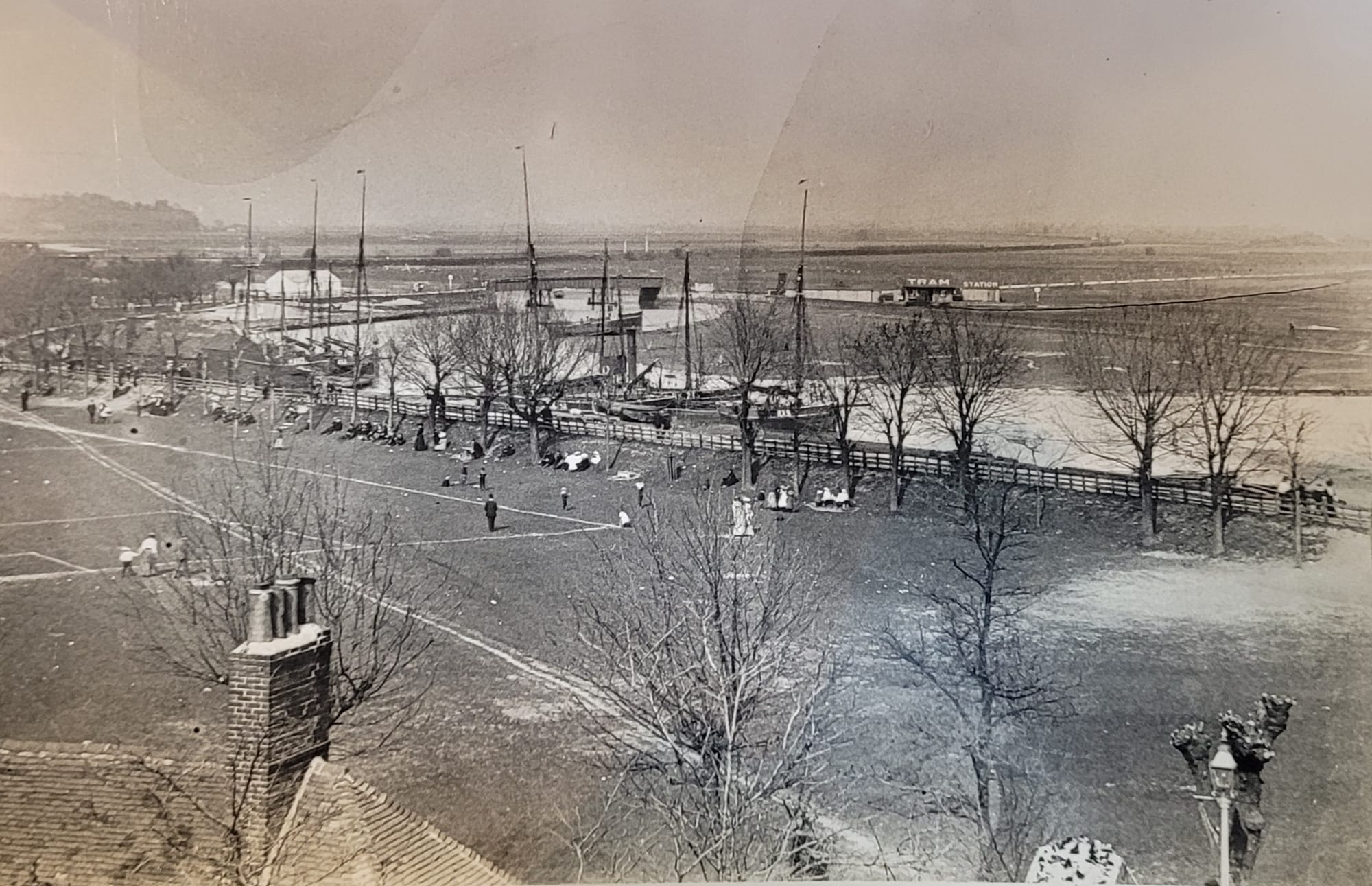
The branch line to Rye Harbour, built in 1854, was used to transport freight and was closed in 1960. The Rye to Camber tram, a narrow gauge line that carried small steam trains, was built in 1895 to transport golfers to the Camber golf club and was extended to Camber Sands in 1908, closing in 1939.
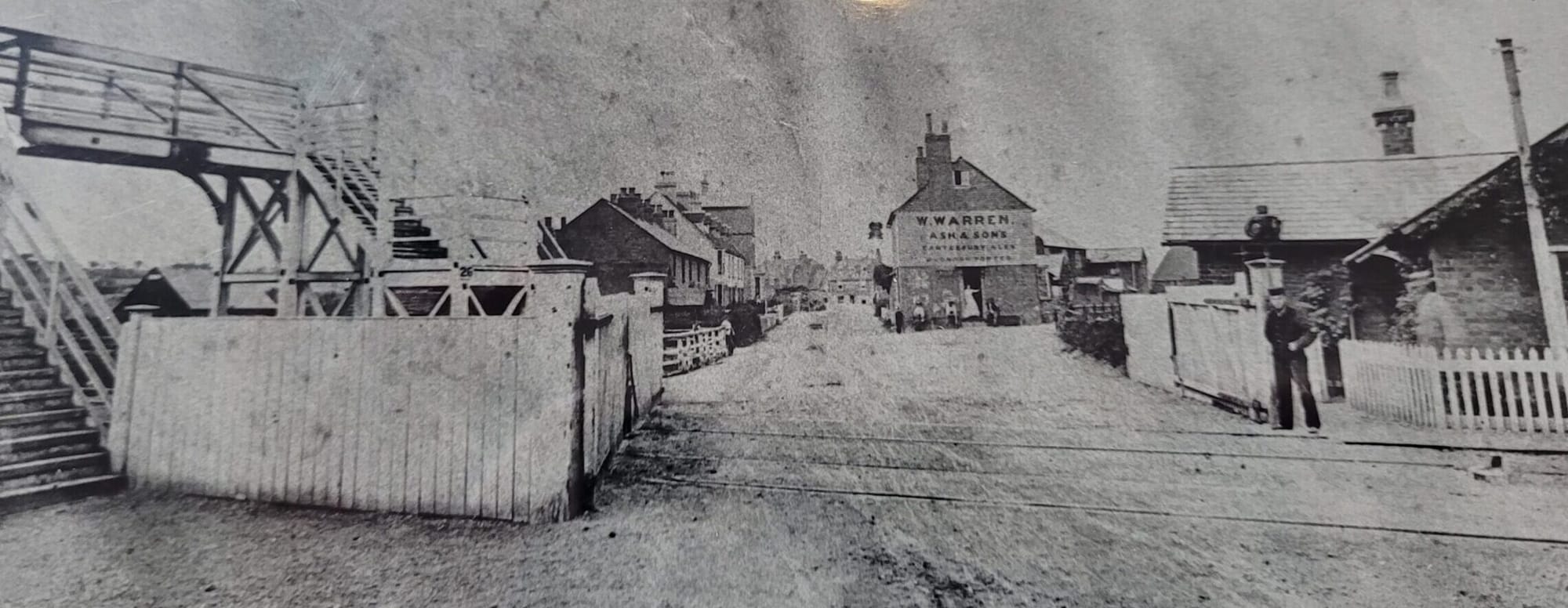
A footway bridge was built over the railway at the Ferry Road crossing.
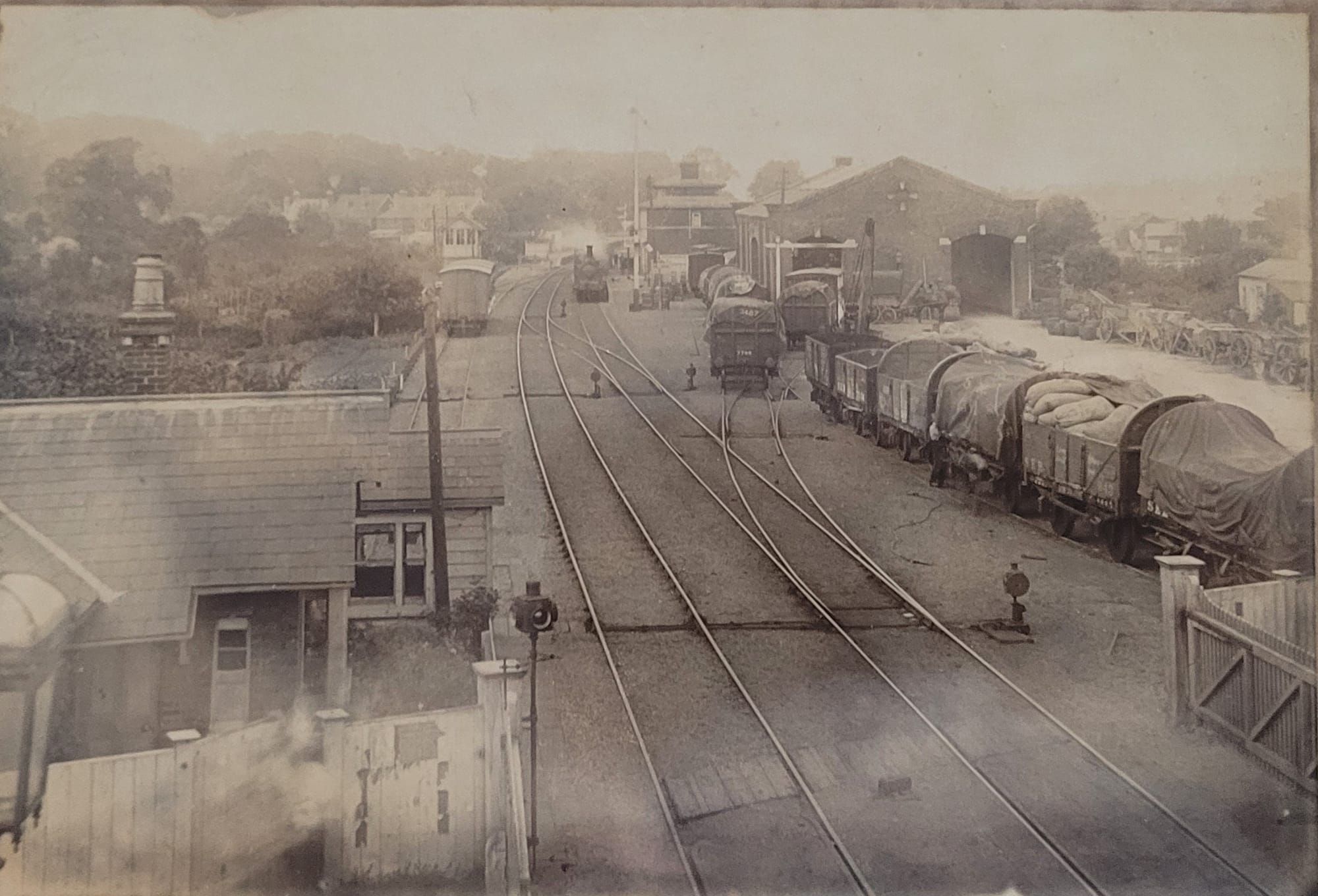
View from the footbridge looking across the station and the railway sidings in the 1890s. There was a coal stage built in 1854 and railway sidings were added in 1874. The sidings included a turntable for trains to Rye Harbour and for the delivery of stock. The cattle and sheep market was situated beside the railway.
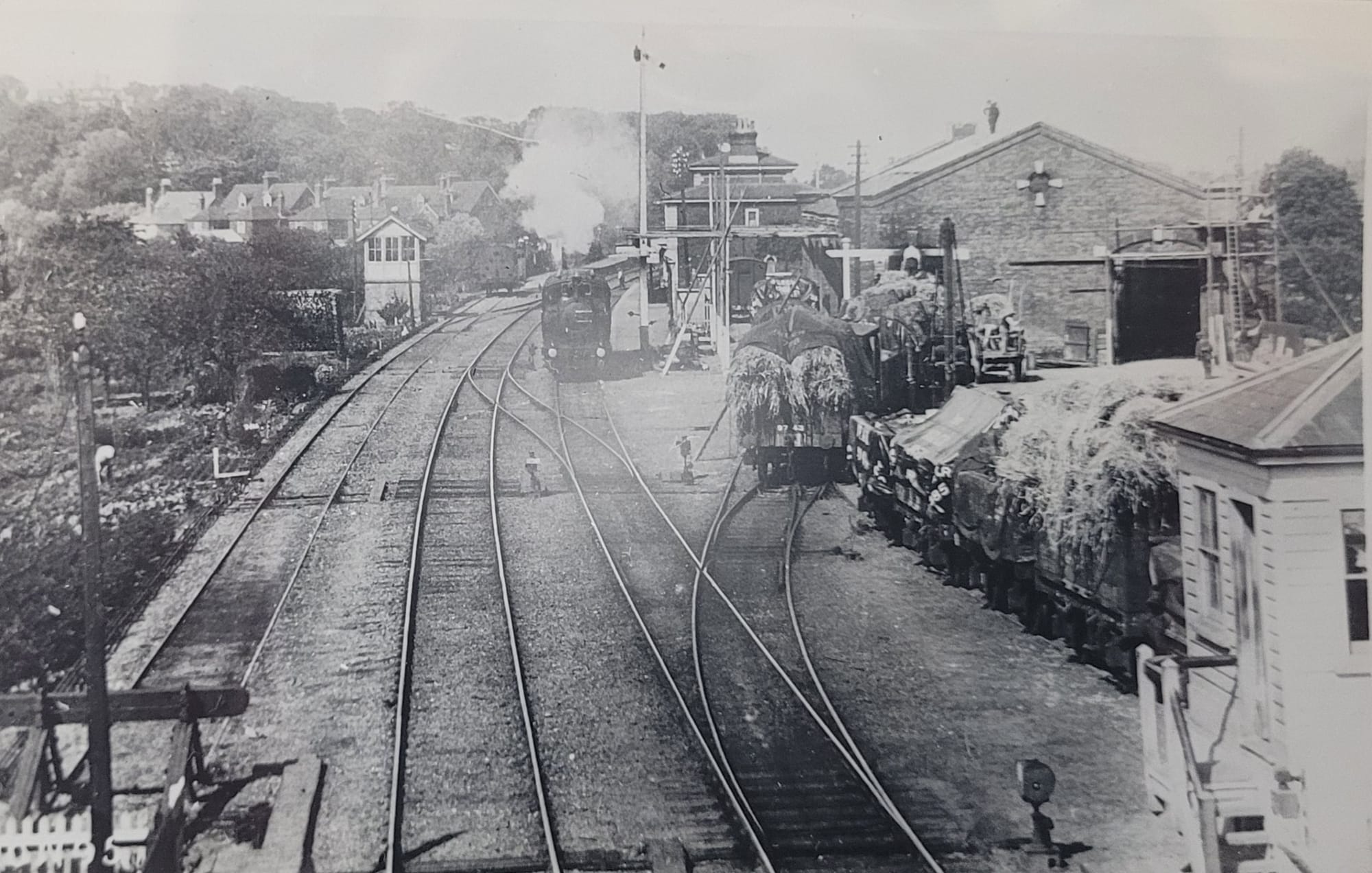
The signal box, built in 1893/4, was listed in 2013, and was restored and repainted in 2019.
The rail line was nearly scrapped in Beeching's 1963 cull of the railways but was given a reprieve as local road connections were considered too poor and bus replacements would take too long. Instead it was made single track for some of the line, between Appledore and Ore, to save on maintenance costs, with a passing loop at Rye. In addition the promised electrification of the line did not materialise. Modernisation came late: Rye station was gaslit until the 70s.
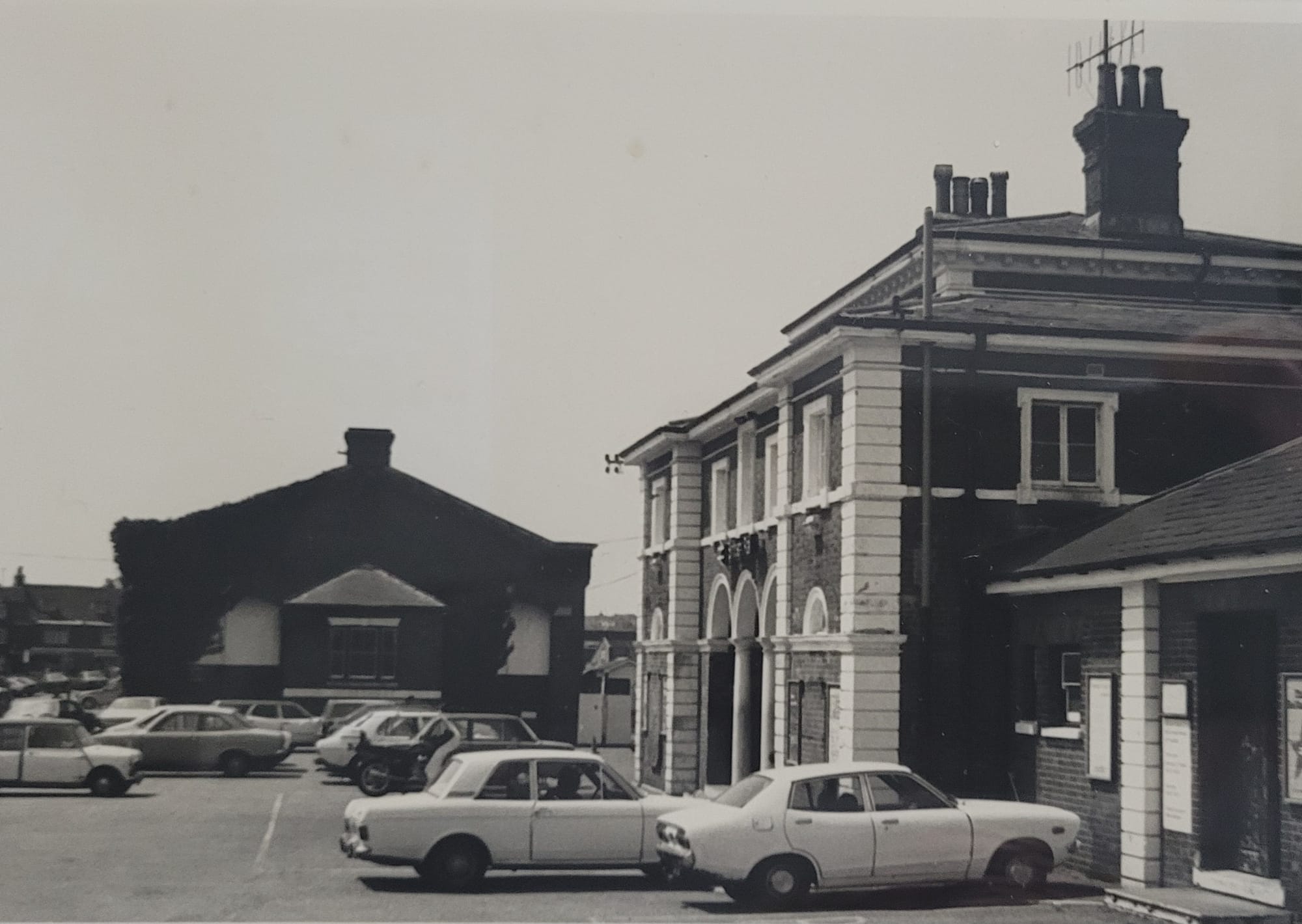
The goods shed in the photo above was closed in 1963 and demolished in 1984 to make way for the supermarket that is now Jempson's. The Italianate station, built in 1850/1, was designed by William Tress and was Grade II listed in 1980.
Thank you to Rye Castle Museum for the use of the images from their collection. The museum, run almost entirely by volunteers, is at two sites: the Ypres Tower (or castle) and at 3 East Street.