


October 18 this year marks the 200th anniversary of a bizarre series of events at Rye Town Hall which led to the birth of true democracy in England.
Since the 1720’s, Rye had been a "Rotten Borough"- ruled by a powerful oligarchy led by the Lamb family, of Lamb House, who controlled the town, embezzled its finances, unfairly administered justice, and were the sole voices in choosing Members of Parliament.
The townsfolk were unhappy and discontented, and local Whig supporters – led by a John Meryon, after whom Meryon Court is named, began to plot against the Lambs, seeking reform.
In 1825, the retiring mayor, Dr William Phillips Lamb, nominated his brother-in-Law, Revd William Dodson, as mayor-elect, in order to preserve his family’s interests in the town. However, Rev Dodson lived in Lincolnshire and was unlikely to ever visit Rye - in reality, Lamb would remain the de-facto, behind-the-scenes mayor until he was eligible to stand again the following year.
On August 28 1825, the day before the official mayoral elections were to take place, 40 of John Meryon’s supporters gathered at the stump of the old cross in the churchyard, where mayoral elections had traditionally been made until 1606, and unilaterally declared John Meryon “Mayor”.
The following day, when Revd Dodson was due to be officially elected as mayor, John’s party barged into the town hall, interrupting the mayor-making proceedings, and demanding that Meryon be declared mayor instead. Dr Lamb refused – so the Meryon party marched to the opposite end of the council chamber and loudly held their own, rival, “Corporation Proceedings,” appointing their own officers.
The Lambs and Dodson still refused to stand down, so on the night of October 18, 1825, the Meryon party approached the town hall under cover of darkness. John Waters, a Gunsmith, picked the lock on the town hall railings, gaining entry to the Buttermarket, whilst a painter, Charles Laurence, climbed his ladder at the back of the town hall and removed a pane of glass in the attic window, from where he made his way down and unlocked the town hall’s huge oak doors from inside.
Thus the Meryon party gained access to the town hall, declared themselves the rightful mayor and Corporation, and occupied it for six whole weeks, barricading the windows and doors, and even staying there overnight. The genuine mayor and Corporation retreated to the Lamb’s country seat, Mountsfield (in Deadman’s Lane), from where they appealed to the King's Bench in Westminster to have the usurpers evicted.
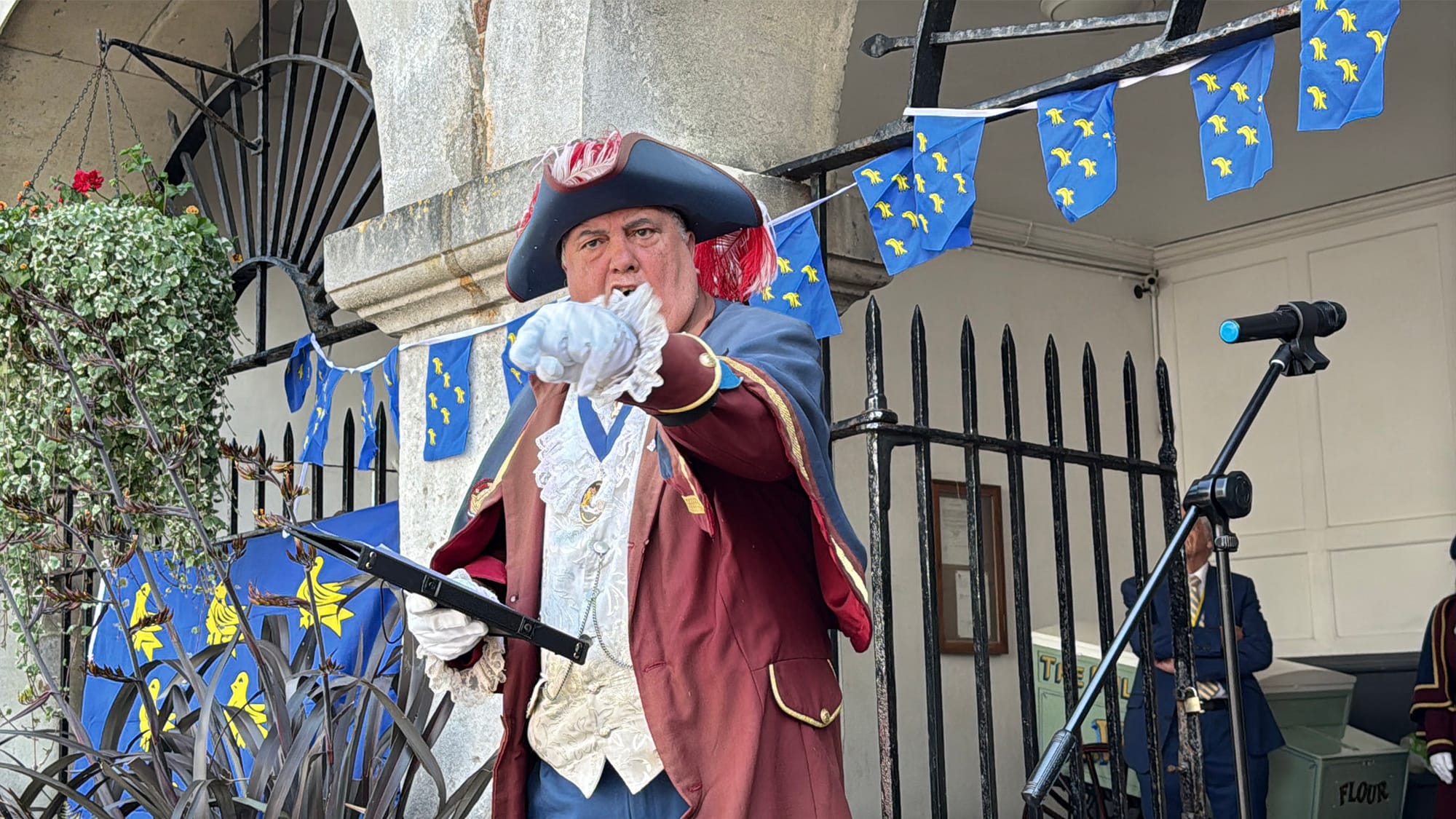
During these six weeks, the anti-mayor, John Meryon, and his "Corporation" passed regulations and by-laws, heard court cases and inquests, and generally behaved as though they were the genuine Corporation – with, it seems, the support of the most of the townsfolk.
They also searched all the town hall paperwork, where they discovered an explosive document signed by the Lamb family and their close associates – a pact to keep the office of mayor amongst themselves and to award each other all the valuable contracts and profits of the town – incontrovertible proof that the Lamb family and the Town Corporation of Rye was riddled with corruption.
They made this document public – which led to outrage and uproar amongst the townsfolk; national newspapers took up the story and soon the whole country knew about it. The spirit of the men of Rye invigorated the cause for electoral reform and soon, as contemporary Rye historian, H P Clark, noted: “The foundation of the Rotten Boroughs began to shake and a desire for reforming the boroughmongering system universally prevailed.”
The eventual result – after further setbacks and revolts – was the Great Reform Bill of 1832, which led to the universal democracy which Britain enjoys today.
After six weeks, the King's Bench ordered the Meryon party to surrender the town hall back to the Dodsons and Lambs – but the damage had been done. Reform was unstoppable, and in the first council elections after the passing of the Great Reform Bill – the first time most of the townsfolk had ever been allowed to vote – the Lamb family, who had ruled Rye for 110 years, were finally voted out of office, and eventually, disgraced and bankrupted, left Rye.
Today Britain is a great democracy, with universal suffrage, the envy of other, less democratic nations - and it all began here, in Rye, two hundred years ago this week.


