

Back in 2016 we had a referendum - should we stay in an increasingly federal EU or had the time now come to part company with our European colleagues?
The campaign arguments revolved, mainly, around immigration (which at the time was still growing), the European Court of Justice (which had overruled the UK Supreme Court in several high-profile cases) and the much-quoted £350 million a week that the Europeans were taking from us. There were, of course, other less headlined issues, for example both farmers and fishermen had issues with EU policy in their respective industries.
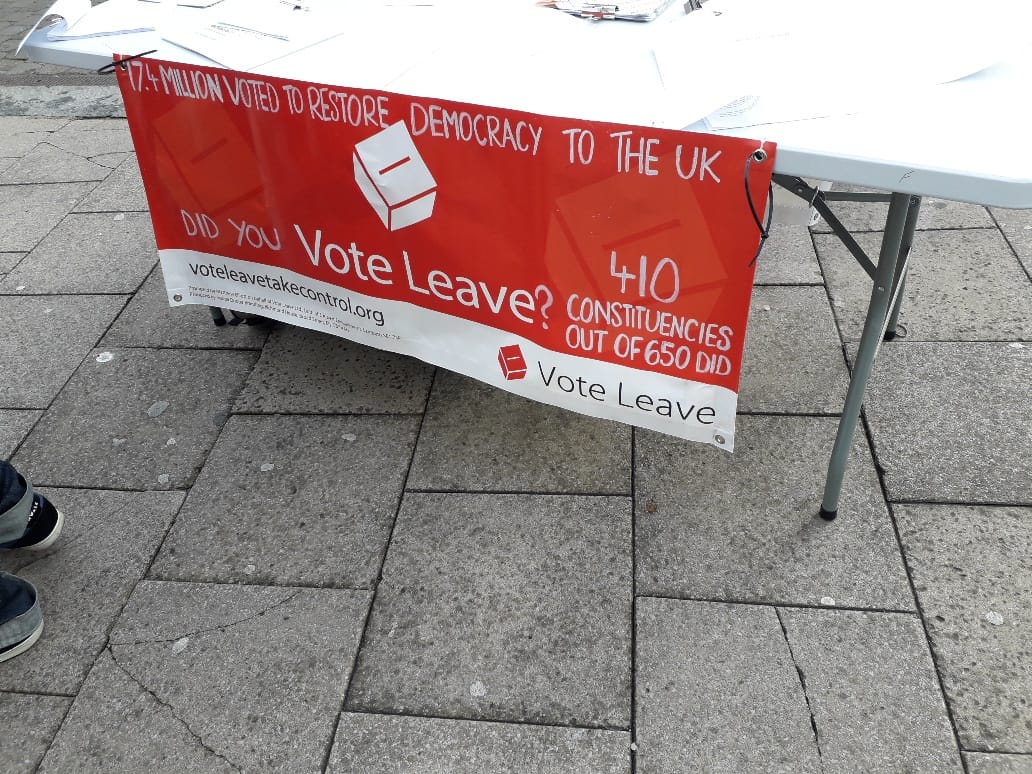
For better or worse, we voted to come out and it was going to be easy: we would just say goodbye, put up the 'no entry' sign to potential immigrants, make our own laws without interference from johnny foreigner and spend the £350 million on more worthwhile causes such as the NHS. Or so we were led to believe.
It was never going to be as simple as that, but even our politicians cannot have realised quite how difficult and contentious the exit process would be, resulting in the country - and even our little town of Rye - being more divided and entrenched in our opinions than we ever were before the referendum. Not helped, of course by politicians (and isn't it interesting how many has-beens, never-will-bes and general no-hopers among them have been turning up on our radios and televisions ready to spout their, often poorly informed, views and gain their 15 minutes - or seconds - of fame).
The prime minister, whoever it might have been, was always going to be on a hiding to nothing. Any negotiated deal - whether from Mrs May, Mr Corbyn or anyone else would have been unlikely to have gained overwhelming support from many of the closed - and frankly ignorant - minds of many MPs who have, themselves, been shown to have nothing in the way of alternatives to offer.
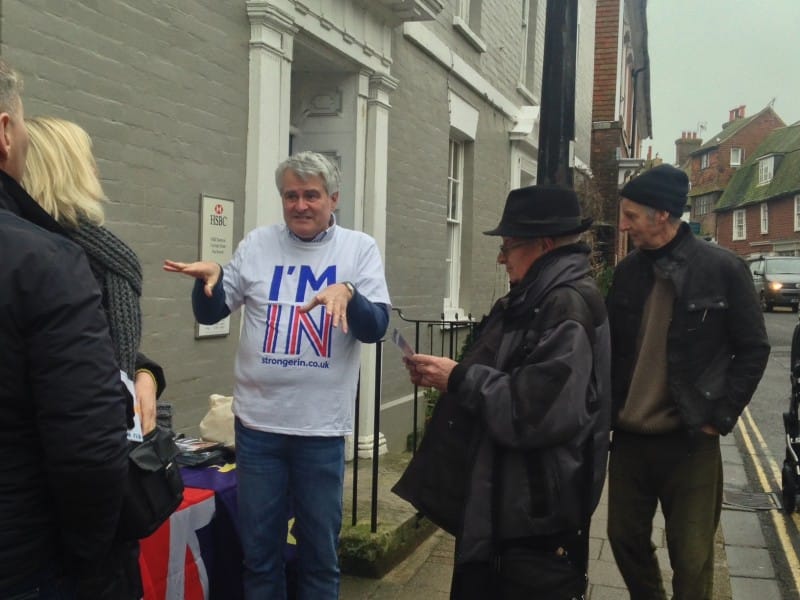
As this is being written, the prime minister is in Brussels with other EU leaders asking for an extension to the original leave deadline of March 29. But what is the deal that she has negotiated that is apparently so hateful to some of our representatives in Parliament?
It is wrapped up in many hundreds of pages of chapters, paragraphs, clauses and sub clauses, but, essentially it comes down to this: It guarantees the rights of UK citizens currently living in the 27 EU states as well as European nationals in Britain, it settles the UK’s outstanding liabilities to Brussels budgets for a payment of around £39 billion (up to £100 billion had been suggested by some, in the early stages) and it takes Britain out of the EU single market and customs union, the common agriculture and fisheries policies and the jurisdiction of the European Court of Justice. There will then be a 21 month transition period during which the UK/EU future relationship would be established.
But, hang on an minute, isn't that more or less what the majority voted for in the referendum? So what's the problem? The problem, if we leave out party politics, is, and not for the first time in history (albeit, often Britain's own fault), Ireland. If we leave the EU, and therefore the customs union, there will need to be customs checks at the Irish border. Because of the sensitive situation in that part of the world, this is not acceptable to either side. But to avoid checks, we need to be in the customs union which in turn means allowing the EU a degree of control over our laws and also immigration - exactly what the referendum majority voted against. This is what is referred to as 'the backstop' which, in theory means that, if no solution is found, the 21 month transition period could be extended for ever so that the UK never actually leaves the EU.
There is surely a solution that can be found despite not only some of our own MPs, but also the EU appearing remarkably obstinate. We should not be surprised at the EU's attitude. They, after all are only following the thinking of Voltaire who satirising the death by firing squad of the British Admiral Byng in 1757, "Pour encourager les autres". The EU have no desire to make it seem easy for the UK and thereby give encouragement to a few other countries who are also becoming disillusioned with their EU membership.
So what is the answer? Perhaps we should follow the example of the Vatican at the election of a new pope: command all 650 MPs to attend the Commons then lock the doors and keep them locked until a puff of white smoke from a chimney indicates they have finally reached a solution. It seems to this writer that, whatever our political affiliations and regardless of how we voted in the referendum, if we believe in democracy we should, for the moment at least, support the prime minister in her battle against her opponents at home, make our views known to our MPs and let's, for heaven's sake, get the job done. After that, if we still want to, we can discuss the future of our leaders.


