It was on a walk through Peasmarsh recently when I came across something that brought to life very vividly a time when Britain was wracked by foreboding. We had withdrawn from Europe and seemed all but cut off from the continent, the fate of which appeared so parlous and yet so bound up with our own. How little times change, you might say. But the time to which I refer is 1940, when economic uncertainty and political reshuffling paled beside the contemporary perception that the all-conquering German army might very soon pitch up on the beaches of the south coast: Britain's sovereignty, post Dunkirk, was far from an academic discussion.
Anyone living in or around Rye cannot fail to know that 1066 country has been on the front line for centuries, and well beyond the Norman conquest. Ryers are proud of our 16th century gun garden, the cannons of which threatened the Spanish Armada; the Military Canal and local Martello Towers tell of Britain's wars against Napoleon. More modest but no less important are the concrete emplacements, redoubts, roadblocks and anti-tank defences of the Second World War, which are still in evidence all over the county. But whilst all these defences were designed to repel an attacking enemy, a small number of discreet structures - some which to this day lie undiscovered - were constructed in the grim realisation that Britain might actually be overrun. One such bunker, dating back to the darkest days of 1940, is what I stumbled upon in Peasmarsh. Given what it signified, I confess, it sent a shiver down my spine.
The structure was a subterranean patrol base for six local men, John Winter, Frank Reeve, Jack Matthews, Jack Goodwin, Walter Dawes and Bill Bailey. All of them knew that if the Germans established themselves in southern England, it would become their redoubt for the 12 days they were expected to survive in the line of duty. This little band formed the Iden Patrol of a secret unit called the Home Guard Auxiliaries. They served in 203 Battalion, one of three such units which covered the whole country – 201 in Scotland, 202 in Northern England and 203 in the South; 203 was expected to be the first of the battalions into action if the Germans invested the South coast, so the Iden Patrol would have been in the thick of it.
The Auxiliary, or “Aux Units” weren't an ad hoc resistance unit like France's Maquis, but a uniformed and highly trained cadre of Home Guard volunteers who'd been recruited from within "Dad's Army", not to blanco webbing and parade for some local Captain Mainwairing, but to harry the invader: to bomb, snipe, stab and garrote. It would have been a grim business, and none of the men who would have operated from the patrol base can have been in any doubt that they would be dying for their country in pretty short order. Indeed, even if the Germans didn't overcome them, the men of the Aux Units, were directed not to be taken prisoner - they would dispatch one another, or take an overdose from the morphine included amongst the explosives, ammunitions, water and rations crammed into their operating base.
The men of the Aux Units were frequently farmers, game keepers and labourers, men who knew the land and could navigate around their county at night. The Iden Patrol's immediate tasks would have included destroying the rail lines and bridges at Rye and disrupting road traffic to Ashford and London. Many structures were pre-rigged by the Aux Units, ready for rapid demolition should the balloon go up. In Stuart Hylton's excellent “Kent and Sussex 1940: Britain's Frontline”, he notes that whilst such contingencies were systematically removed post-war, in 1978 a bridge near Margate was discovered still to be wired for immediate destruction! The secret nature of the men's work meant that only in recent years have their enterprises begun to come to light, and today, many are still unaware of the steely determination of our forebears.

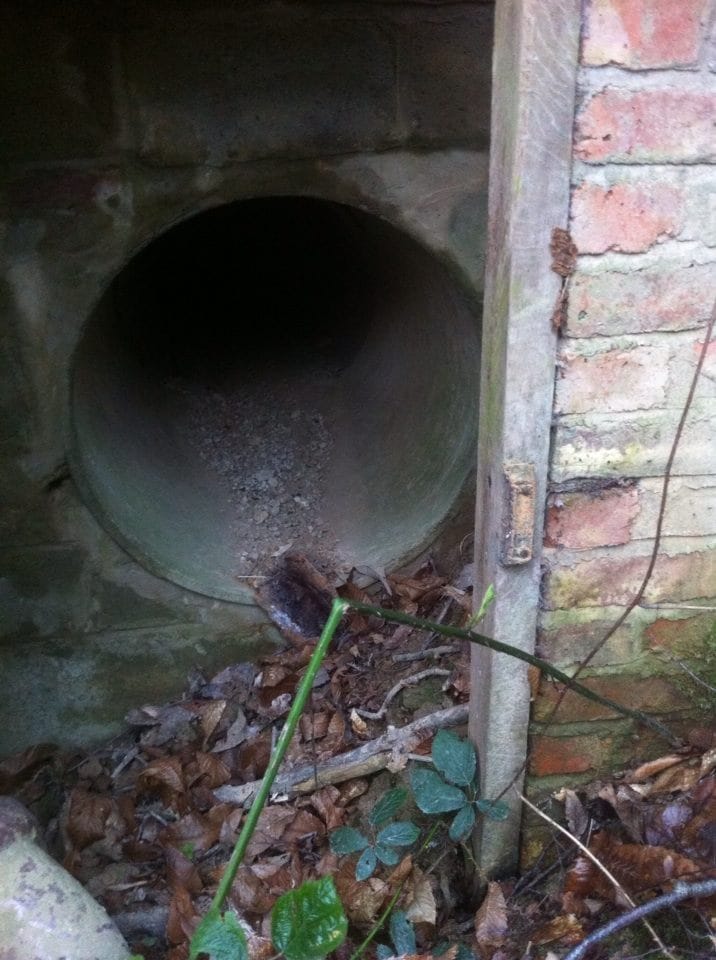
The Operating Base today is hidden, as it was then, in a thickly wooded hillside, with a long concrete escape tunnel leading from the main bunker into a gulley. Back in 1940, the lives of the Iden Patrol would have depended on their hide being undetectable to a marauding German search parties, and the secret access hatch would have been heavily camouflaged with foliage. The brick chamber is still intact though the corrugated roof has either been removed or disintegrated over the years. The access shaft is still apparent, and the escape tunnel looks like it was built yesterday – I crawled its extent with some trepidation, expecting to be met by a badger. Sadly, however, the base is generally inaccessible, as it is located on private land – I happened upon it by chance and must apologise for my trespass - however, what a terrific memorial it would provide could it be restored for local people to visit.
From the edge of the wood which shrouds the base, Rye is visible a few miles away, and one can imagine the Iden patrol setting out across the fields to attack the rail line or to snipe at German invaders. Thankfully, the men never had to sacrifice themselves, but the resolve of such individuals – and those of the Icklesham Patrol, just up the road – serve to provide some perspective to the travails we face today. Yes, once again we feel somewhat isolated and uncertain, but if there are Germans at large on the High St, they're merely there as tourists taking advantage of the declining pound, and if the railway's been sabotaged, it's only Southern Rail.
I must credit the following excellent sources for much of the information included in the article.
Sources:
The Secret Sussex Resistance – Stewart Angell
http://www.auxunit.org.uk/Angellbook.htm
http://www.subbrit.org.uk/sb-sites/sites/i/iden_au_hideout/index.shtmlhttp://www.coleshillhouse.com/sussex-auxiliary-units-and-their-operational-bases.php
http://www.coleshillhouse.com/iden-auxiliary-unit-patrol.php
Photos: G Harris