Before deciding whether they are willing that Rye College should be run by the religious Aquinas Academy Trust, Rye parents and residents might wish to give some thought to whether it is desirable for Rye’s only secondary school to be taken over by an organisation named after a 13th century Italian Catholic theologian, some of whose (saintly) pronouncements are far from well suited to the education of young people in the 21st century. Here is just a selection:
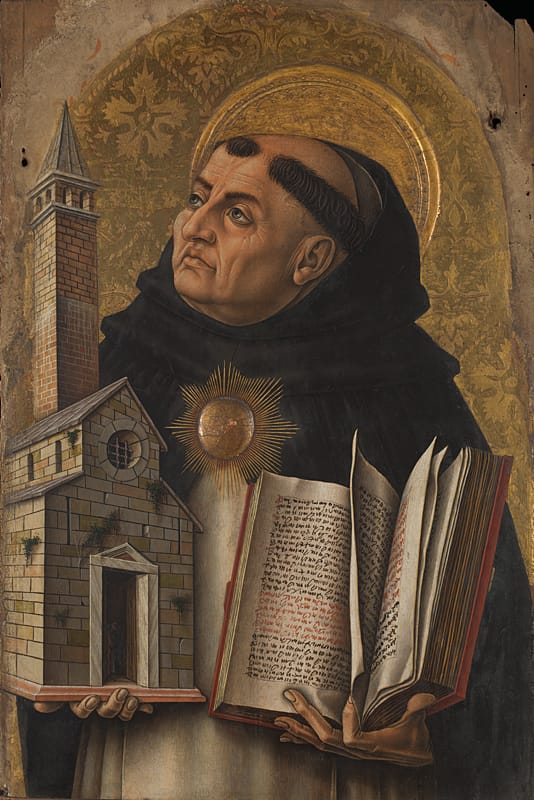
The inferiority of women: “The male is separate from the female because the male is more ordered to intellectual operation.” “Woman is subject to man because in the male reason predominates.” “Man’s superiority over woman flows from his having been created first.” “Man is the image of God in a way a woman is not.” “A woman’s hair is a sign of her subjection.” Witches: the 15th century witch-hunter’s manual Malleus Maleficarum began by quoting Aquinas and quotes him over 100 times. Promoters of the witch phobia which followed often quoted Aquinas more than any other source. Marriage and parenting: “Marriage should be indissoluble because the father is useful in the education of the children (a) because he is more rational than the mother (b) because being stronger he is better able to inflict physical punishment". Heretics (i.e. people who think for themselves): “They deserve not only to be separated from the Church by excommunication but are also to be severed from the world by death.” Seeking after truth: Bertrand Russell on Aquinas: “He is not engaged in an inquiry, the result of which it is impossible to know in advance. Before he begins to philosophise, he already knows the truth: it is declared in the Catholic faith.” That is the nub of the problem with faith schools: They already know the truth. And their particular truth is always the best or even the only one. Is it not time that it became a human right for children not to be indoctrinated at school with whichever exclusive truth their school exists to promulgate, which has always been the raison d’etre of religious schools? Education should not be the imposition on children of the beliefs of others but a fostering of the ability to think for oneself, assess evidence and gradually develop their own beliefs and values and make their own life choices and decisions. It means teaching them about the many different ways in which mankind has attempted to make sense of the world, and allowing them the freedom to decide which, if any, of those beliefs they eventually wish to embrace. There is abundant evidence that the recent encouragement of “faith schools” has allowed the existence of some schools which have been permitted, at their worst, to censor the broad national curriculum, teach creationism in place of science, ignore other religions, promote misogyny, practise gender segregation, create cultural isolationism, foster intolerance, withhold sex education, demonise homosexual people and generally stifle freedom of thought. It is of course important to acknowledge that the vast majority of religious schools cannot be faulted on any of these counts. But however enlightened they may be, it cannot be right that religion and education in this largely secular country are still, and perhaps increasingly, linked in a way that is not permitted for government schools in the US and several other countries. The freeing of education from the grip of religion is long overdue.
Photo: Kenneth Bird