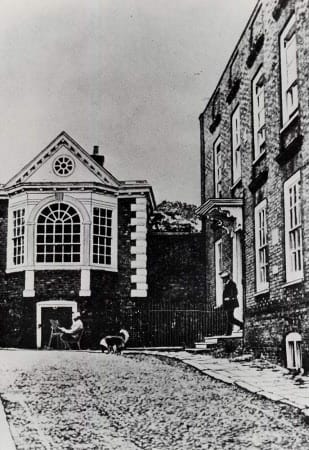
The National Trust will be "developing plans around a long-term project centred on the Garden Room" at its historic Lamb House property in Rye.
"These plans will be dependent on funding, so we do not have any further information to share at this stage. However, we hope this project will bring the local history of this wonderful building and its residents to life," a local NT spokesperson told Rye News.
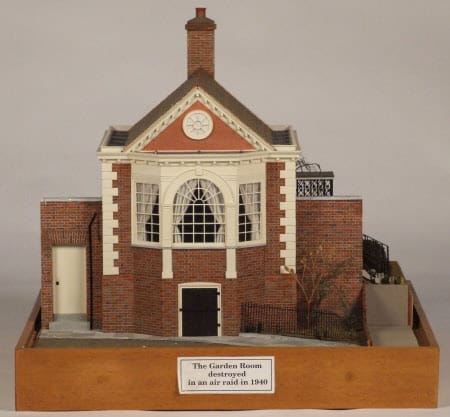
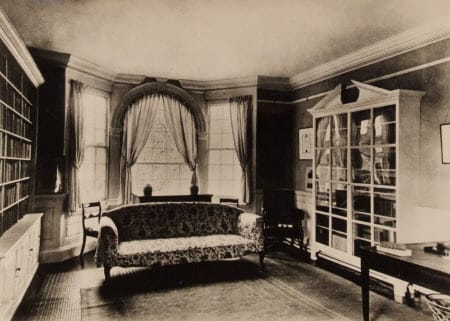
In August 1940, a German bomb destroyed the Garden Room (or Garden House), where Henry James wrote a number of major works and which also features prominently in E F Benson's Mapp and Lucia novels.
E F Benson says in his "informal autobiography", Final Edition: "I outlined an elderly atrocious spinster and established her in Lamb House. She should be the centre of social life, abhorred and dominant, and she should sit like a great spider behind the curtains in the garden-room, spying on her friends, and I knew that her name must be Elizabeth Mapp."
While full details of the current initiative, and the time frame, have not been publicly disclosed, the news that a major project is being planned — possibly involving the room's reconstruction — will stir immense interest locally and further afield.
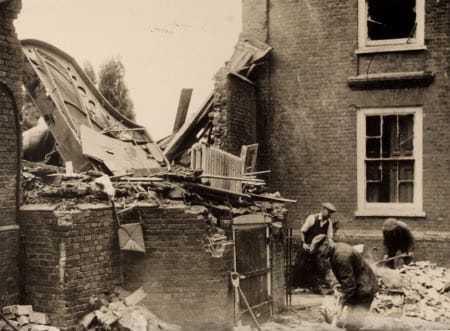
The 85 years following the external room's demise have witnessed numerous campaigns for the iconic structure to be rebuilt. In appendices to its 2018 planning statement, aimed at changing Lamb House to a 'sui generis' visitor attraction, the NT said: "A significant architectural feature — the Garden Room — which also forms a crucial space for the telling of the Lamb House story, awaits reconstruction following destruction during the Second World War . . . From the moment the Trust considered Lamb House for acquisition, the rebuilding of the Garden House was declared desirable."
If the structure is rebuilt it could be an expensive project and access to the Citadel site may prove difficult. Various planning hurdles would also need to be negotiated.
Given Lamb House's strong connection with American author Henry James, some people have suggested that donations for a rebuilding venture could be sought from the United States.
By the time the wall was finally repaired in 1965, it had gained a plaque commemorating the loss of the Garden Room and a semi-oval indentation revealing the upper part of a house in the street beyond the garden. In the early 1950s, "the citizens of Rye themselves preferred a gate, as they could then enjoy a nice view of the garden," the NT has reported.
The year 2025 also marks the 75th anniversary of the NT assuming ownership of Lamb House. Until January 2018, the upper two floors of the house were occupied by tenants, meaning access was restricted to the ground floor. This caused "visitor frustration and disappointment with the limited offer and lack of accessibility to more of the house," the NT said in 2018. The first floor has largely been refurbished and opened up, with the Green Room, King's Room, Dressing Room and White Parlour now open to the public. With fresh plans for exhibitions and other events, Lamb House is now better placed than ever to welcome visitors.
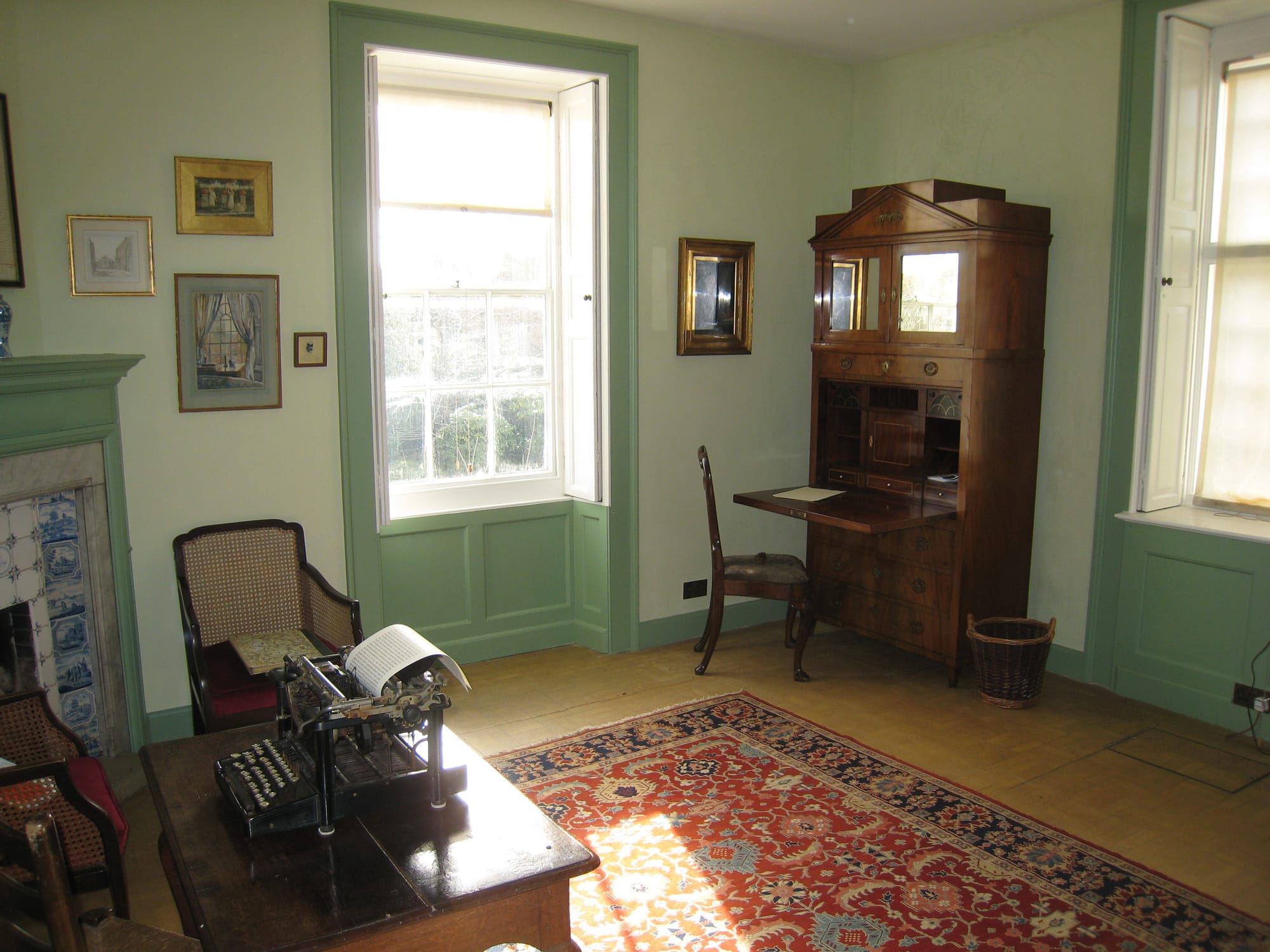
The renowned Green Room, which Henry James paced while dictating his novels, and which was subsequently used by author-tenants E F Benson and Rumer Godden, has been redecorated in the Edwardian style and contains Henry James' writing bureau — recently returned after a year's conservation work. It's likely that the upper floor of the house will be converted to feature the servants' quarters that originally formed part of the property.
Visitor numbers to Lamb House almost tripled to 17,004 in 2015, following the previous year's BBC television series Mapp and Lucia. Danial Demaine, the NT's collections and house officer at the Rye property, reveals that 23,500 people visited in 2024.
Danial says the NT has managed to secure a number of fascinating items once owned by the residents of Lamb House, including the morning suit Henry James wore in the portrait painted by John Singer Sargent in the National Portrait Gallery. James' suitcase, an original signed luggage label from 1908 and his easy chair from the Green Room have also been reacquired. The suit had an interesting life, as it was later owned by poet Sir John Betjeman and actor and satirist John Wells.
Three prints by caricaturist Max Beerbohm once owned by Henry James are currently at the NT's conservation hub in Knole and set to return to the Rye property this year. They will form part of a new exhibition in 2026 focusing on the friendship between the men.
In addition to the 1940 bomb damage — which destroyed several hundred of Henry James' books (along with E F Benson's piano) — the house lost much of its furniture, other books and historic contents as these were sold by public auction by the widow of Henry James' nephew, prior to the NT takeover. A number of books and some of the furniture have since been recovered by the Trust and it remains keen to source original items.
Plans are also on the cards for improving access around the house and garden, possibly including re-landscaping the garden.
Completed in 1723, the Georgian Lamb House was originally the home of the Lamb family, whose male members served as Rye mayor dozens of times between 1723 and 1832, when the Reform Act effectively ended what has been called "oligarchic government" in provincial towns. Rye was, in effect, a "rotten borough" controlled by the Duke of Newcastle and the Treasury.
Such was the Duke's political control, a saying arose in Rye that "if the Duke sent one of his coach-horses as their representative, the freemen [of Rye] would elect him".
Lamb House reopens to visitors on Friday, February 28.
Entry for adults (non-members of the NT) is £9.50. Opening times are normally Friday to Tuesday 11.00 to 17.00 March to October. Further details can be found here.
Lamb House can be contacted by email at: lambhouse@nationaltrust.org.uk