


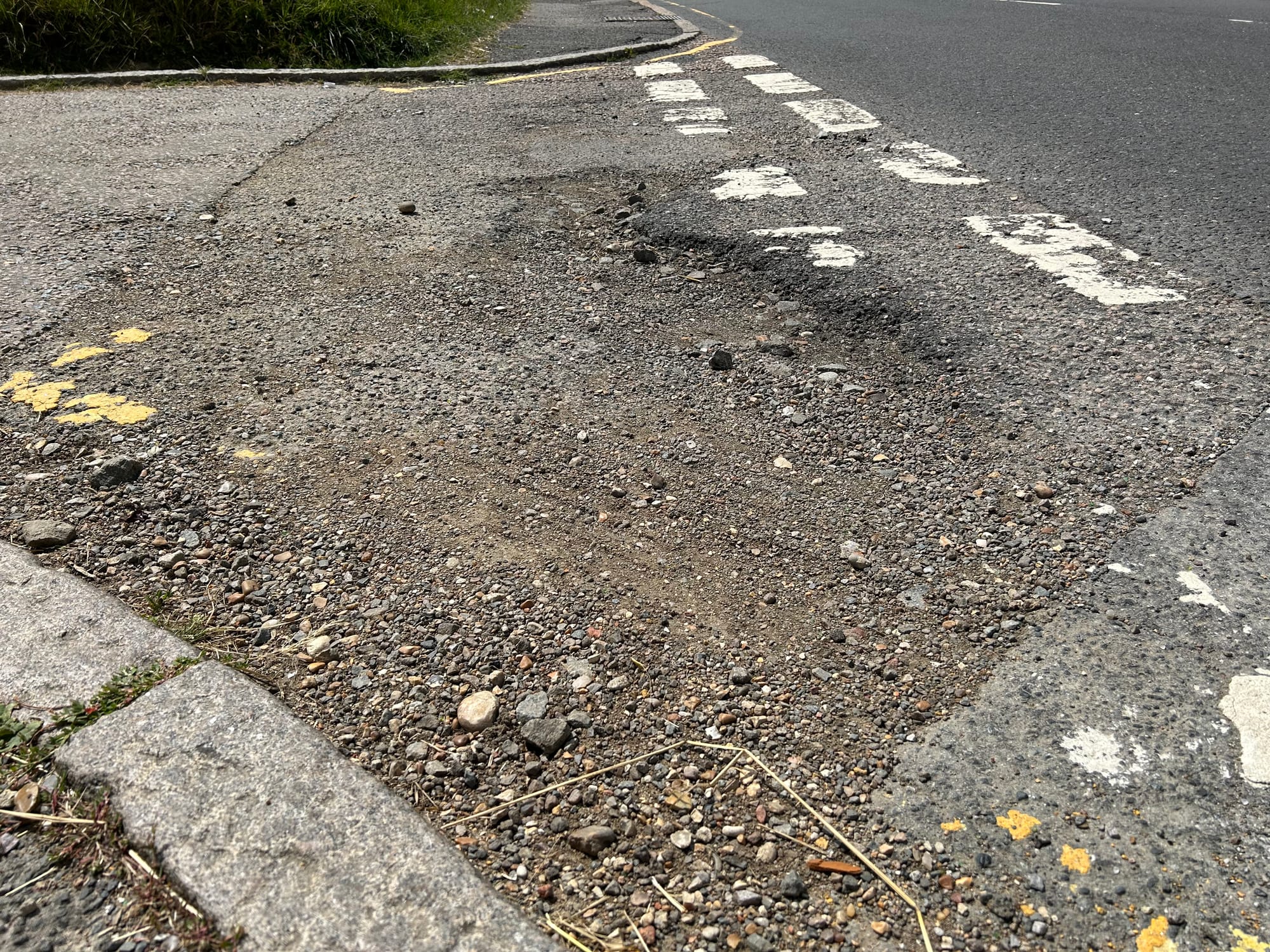
Guy Harris’ article on potholes in Rye News last month fails to mention the elephant in the room, which is climate change – merely ascribing blame for potholes to ‘the weather’.
Landslides and potholes are the direct result of climate change. Last month was the world's warmest February ever, extending the run of monthly records to nine in a row - each month since June 2023 has seen new temperature highs. Carbon dioxide concentrations are at their highest level for two million years.
Increased CO2 emissions generate more moisture in the atmosphere, which leads to more rainfall. The south of England had its wettest February since 1836. After periods of intense rainfall the ground is saturated, and as rain continues the pressure increases until it leads to the structural failures (landslips) which we have seen in Military Road, Dumb Woman’s Lane and locations in Hastings. Increased rainfall (plus more and heavier traffic) also cause potholes.
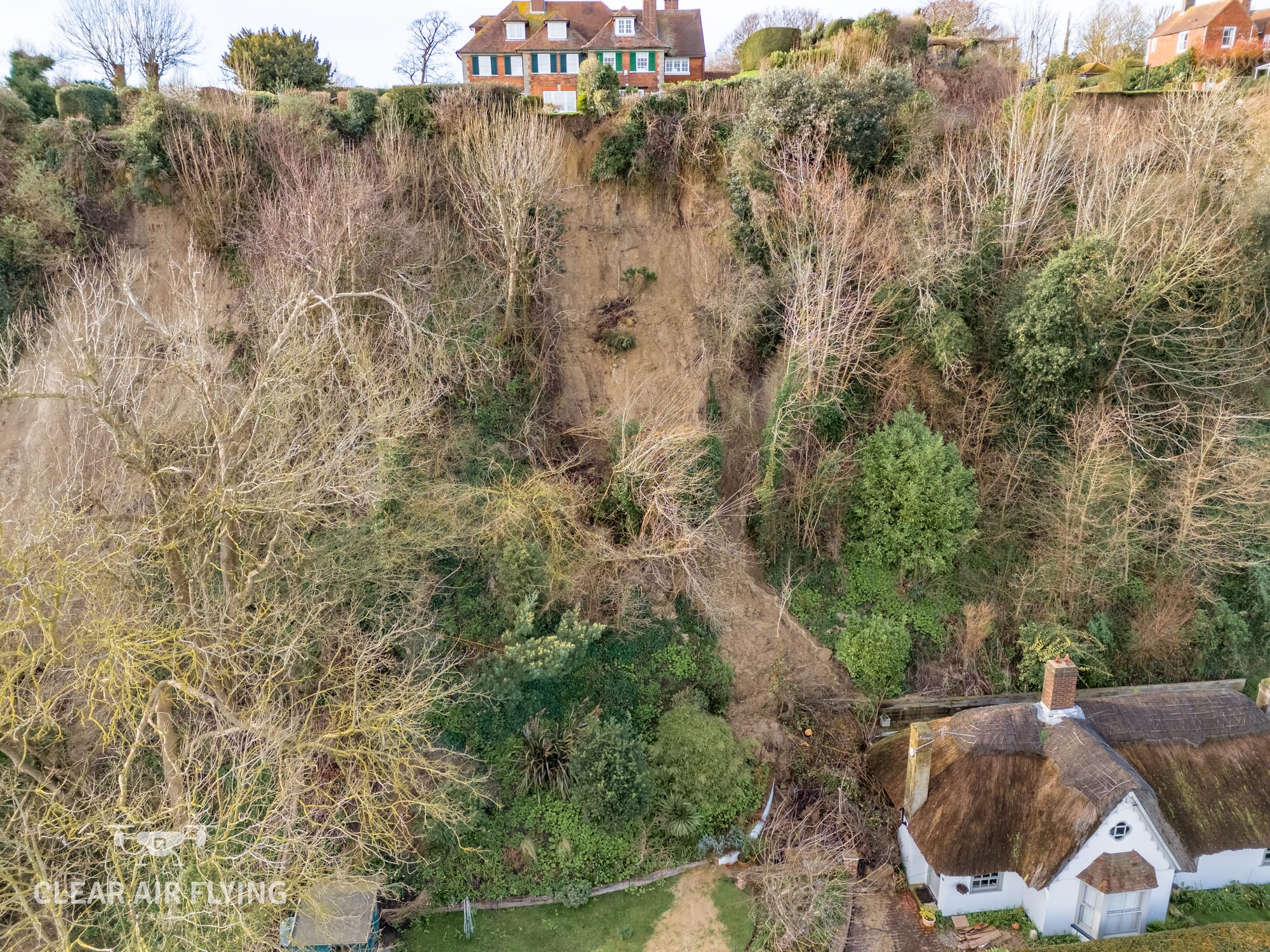
Cars are the primary source of transport CO2 emissions in the UK, accounting for 52% of all vehicle emissions in 2023. Clearly, we need a ‘modal shift’ to more sustainable, less polluting ways of getting around. An added bonus is that the health and social benefits of walking and cycling routes demonstrate returns of £5 for every £1 spent, not including the savings to the NHS of a healthier population (especially urgent given that 64% of all adults in the UK are overweight).
This is not a message which our transport authority, East Sussex County Council appears to grasp, following a decade of under-investment where they have achieved virtually nothing. The schemes they have promoted are poor quality, or not connected to each other. You can’t expect parents to allow their children to cycle on a route which ends in a dangerous roundabout, for instance. The number of
people cycling in East Sussex has declined, which is hardly surprising when you consider somewhere like Eastbourne where buses, taxis and delivery vans are allowed in the town centre but cyclists are banned, forcing them onto busier roads.
And this was meant to be ESCC’s flagship town for active travel!
At the Rye annual town meeting Councillor Keith Glazier trumpeted the £1.22m ESCC received in 2023 from Active Travel England but unfortunately their track record shows that ESCC has neither the ambition nor the skills to deliver, with almost the entirety of their meagre active travel budget previously having been spent on design, assessments, reviews, process, salaries and consultations. They haven’t built a single cycle route in the last six years.
We need to start having difficult conversations about how we re-allocate road space to allow people the option of healthier, more sustainable transport. Of course plenty of us rely on cars, especially in rural areas (myself included). But we also need to make safer routes for walking, wheeling and cycling if we’re to tackle the causes of climate change – and those pesky potholes.
How can we create better and safer active travel routes through Rye? Please come
to an open meeting of the Rye Bay Cycle Forum at the Queens Head (19 Landgate) at 7pm on Wednesday, March 27. For more information email info@sussexgreenways.org.


