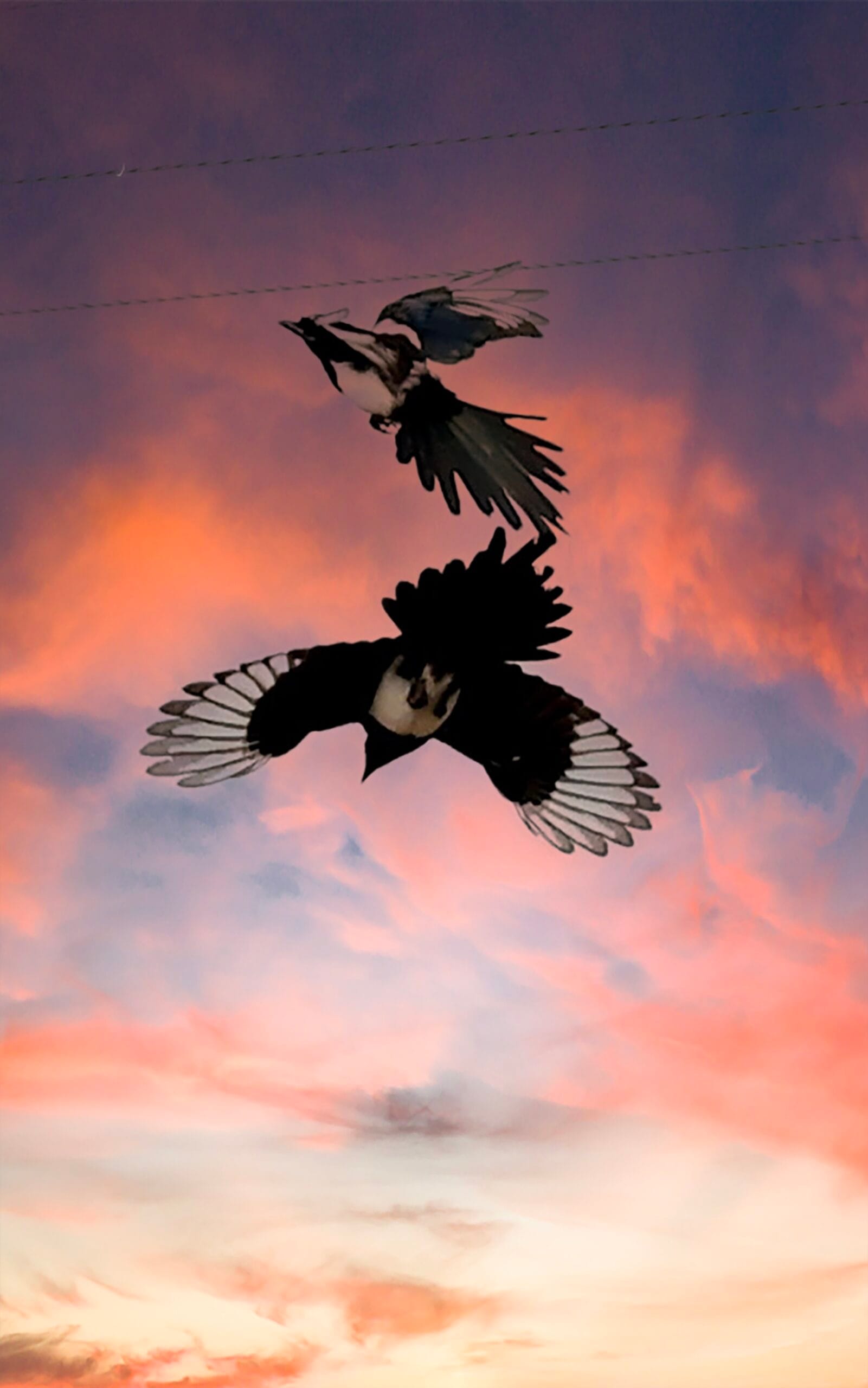
Magpies appear to be flourishing at the moment and on many mornings in our garden in Rye Harbour we have over six foraging for food, and that’s a lot of saluting. Viewing a solitary magpie is seen as a sign of bad luck. Over the ages people have used different ways to ward off the misfortune that people think the magpies bring including saluting the bird, saying "Good morning, general" or "Good morning, captain", doffing one’s hat to it and spitting three times over your shoulder. In Somerset they say that people should carry an onion at all times to ward off any evil that a magpie might bring.
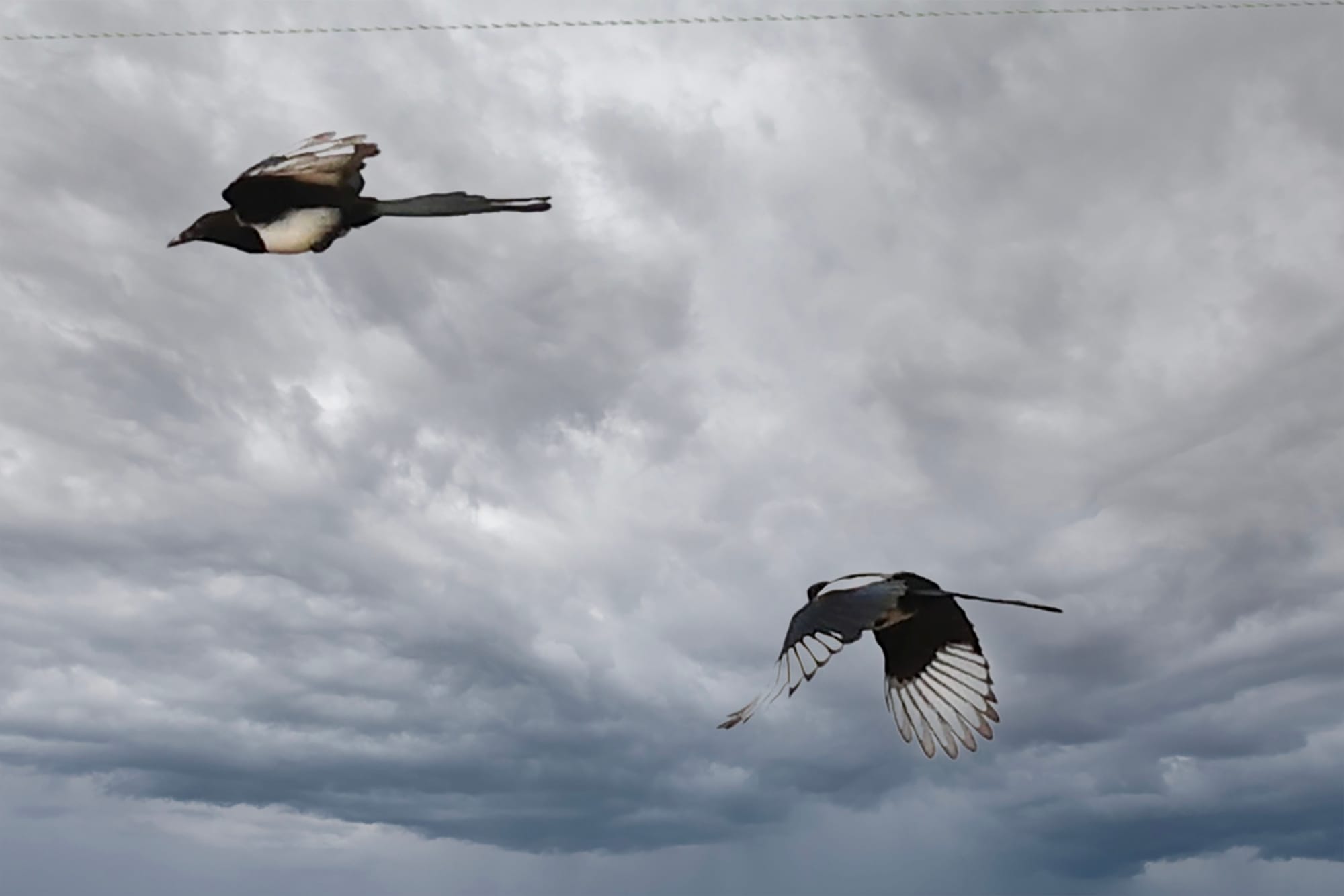
When our generation was growing up it was taught the rhyme "One for sorrow, two for joy", nowadays it’s more like, "eleven for a cricket team"!
Magpie numbers in Britain and Ireland, in suburban areas, have quadrupled in the last thirty-five years. Why is this? The birds have a year-round food source of food from road kills, and other food sources in gardens, such as fruit and vegetables. The magpies are also adaptable and have bounced back from earlier routine killing.
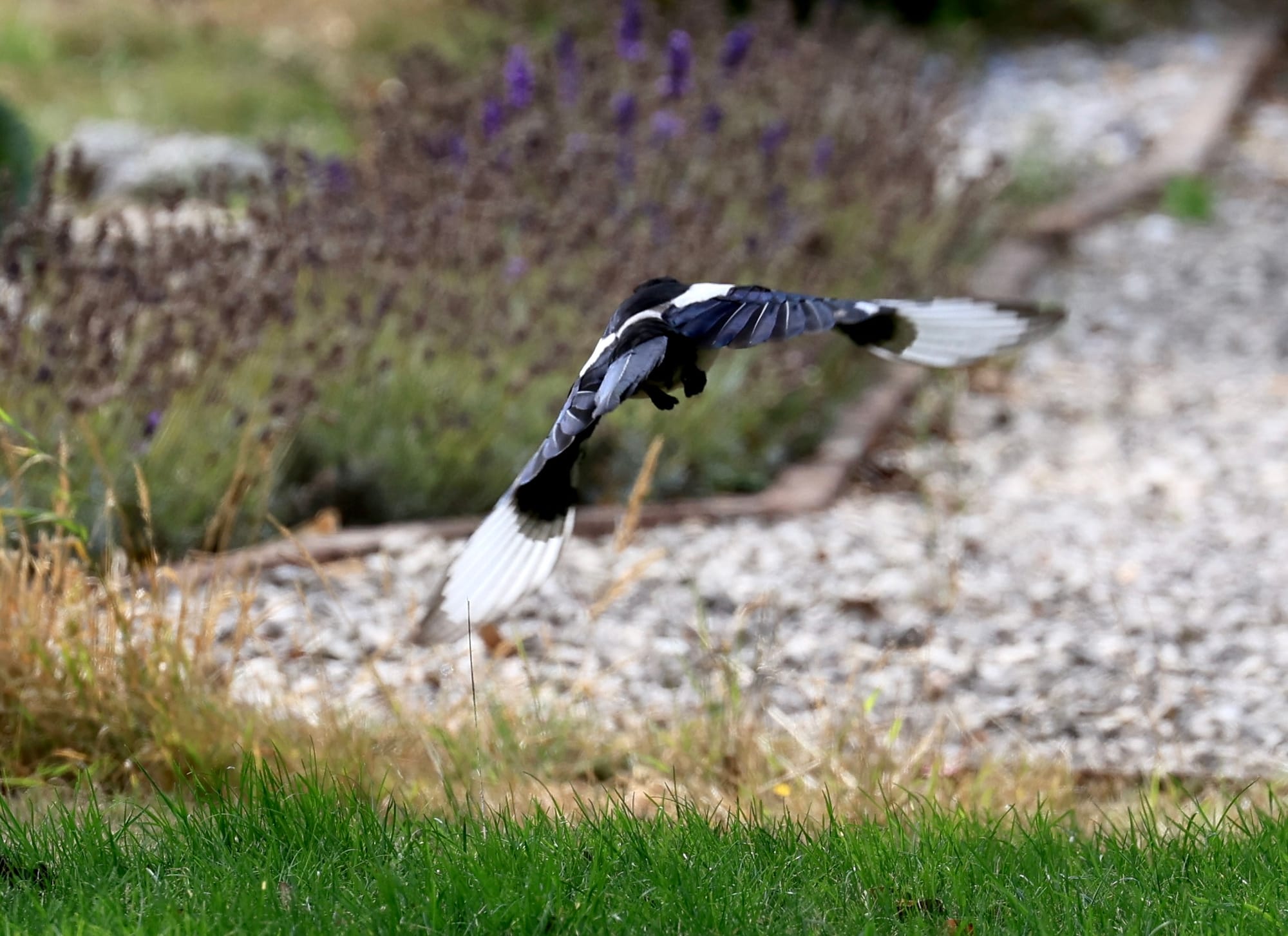
The magpie is one of our most distinctive wild birds with its black plumage, white flanks, belly, and wing patches, Looking more closely one can see the black feathers actually take on a purplish-blue hue and the tail has a green gloss to it.
In China, a singing magpie is thought to bring good fortune and is considered to be a symbol of happiness and luck. Koreans think that the bird delivers good news, and the Mongolians think it is smart enough to control the weather. A magpie feather is worn as a sign of fearlessness by native Americans.