Now that we have seen the three Mapp and Lucia dramatisations on BBC, we can begin to assess them. The first episode was, to me, excellent and put the characters into their setting and established their respective traits. I felt the cast was admirable and Anna Chancellor better represented Lucia in this production compared with the LWT series.
The finished photography was lush and of superb quality and Rye was definitely one of the stars of the production. However, we do need our town manager: the weeds growing up everywhere looked very verdant. The art direction and attention to detail were wonderful. Market Street was transformed. It was these aspects of the production and the actors that made it impressive. It was also a joy to see so many friends among the shoppers and passers-by.
I feel it is very difficult to dramatise the Tilling stories. So much is carried by Benson’s editorial voice. I thought Steve Pemberton [who adapted the novels for this series], perhaps in the desire to take good stories from Queen Lucia and Miss Mapp, brought too much to Mapp and Lucia and, in the process, undermined the leading characters. It was too crammed with incident, which in the case of Mapp often detracted from her formidable character: it was bordering on caricature.
Take the instance of the Guru. Would Miss Mapp really have taken him in as a stunt? True, Pemberton made it clear it was Diva who had requested him but, to me, Mapp would have sent him packing to Diva at once. Those of you with knowledge of the novels know that this story belongs to Daisy Quantock in Queen Lucia, who was always having a new fad: it fitted her character. It did not fit Diva’s, let alone Miss Mapp’s.
That said, it was enjoyable to watch and many of the set scenes and encounters were perfect: the scene where Lucia decides that Coplen must tend to the garden and Miss Mapp’s reaction; the whole episode of the tableau and garden fete and the arrival of the Contessa and its consequences.
The costumes were fitting, but I did feel Lucia was a little too advanced with her slacks. She was born in about 1885 and was not a smart young late-1920s / early 1930s woman. Also, Tilling would be a little behind the times, as would all small towns. The women either made their own clothes or had a dressmaker to alter them. As Miss Mapp commented about the “flash” Mrs Poppit, later Mrs Wyse, Tilling had an attitude of “good breeding on narrow incomes”.
Similarly, I felt Miss Mapp would never have served caviar and champagne; she did not have enough money. She had to let Mallards each year in order to continue living there. She was frugal. Never would she have thrown food away. It is this interpretation that detracts from her as a character.
However, the series will have brought many new people to the books, I hope, and it will certainly bring people to Rye this year. I am sure it will bring another series, which will be a treat. There will be more filming - and let's hope it will be in another spell of good weather.
When visitors come to Rye will they be looking for Miss Mapp and Lucia and the other characters? Will they find them in the town? That, of course, is another story in itself.
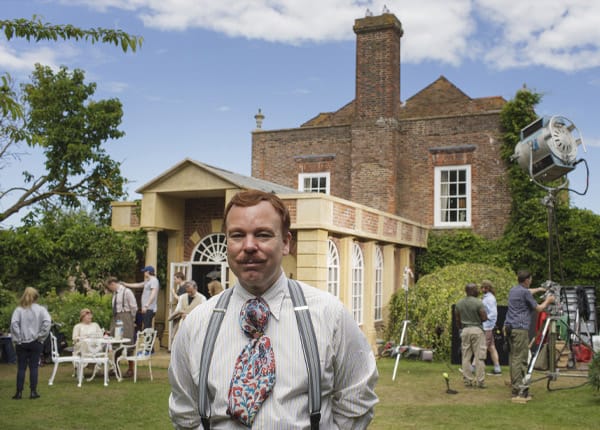
Allan Downend is secretary of the EF Benson Society / Photos: BBC