


A public meeting on Thursday 13 November at the Tilling Green Community Centre heard the latest on the devastating pollution incident at Camber Sands. Organised by Hastings and Rye MP Helena Dollimore, residents questioned Southern Water, Rother District Council and the Environment Agency.
It followed the stunning admission from Southern Water that millions of plastic bio-beads were released three weeks ago from their Eastbourne Wastewater Treatment Works during Storm Benjamin.
The exact number is in doubt, however the meeting was told by Strandliners it could be almost 300 million. Pellets have also been confirmed at other beaches and at the Rye Harbour Nature Reserve.
https://www.instagram.com/reel/DRCsEd_ivob/?igsh=YXNrNDN1NXZhNWhh
Helena Dollimore encouraged anyone who sees the pellets to call the hotline on 0800 807060 quoting reference 2440833.
Also on Thursday the Environment Minister Emma Reynolds told MPs she was "appalled" by the incident and queried why it was not "uncovered earlier." Later in the day Water Minister Emma Hardy described the pollution as "devastating" as she visited Camber to see the pollution for herself. You can read her interview with Rye News here.
Bio-beads, which are black or grey, were first seen in huge quantities on Camber Sands along a 2-mile stretch of the beach in early November. They are dangerous to marine and local wildlife as the beads can be mistaken for food. Dog walkers are being encouraged to keep their pets on leads.
With the proximity to the Rye Harbour Nature Reserve and the dune habitat of Camber being a Site of Special Scientific Interest, concerns are running high about the environmental damage.

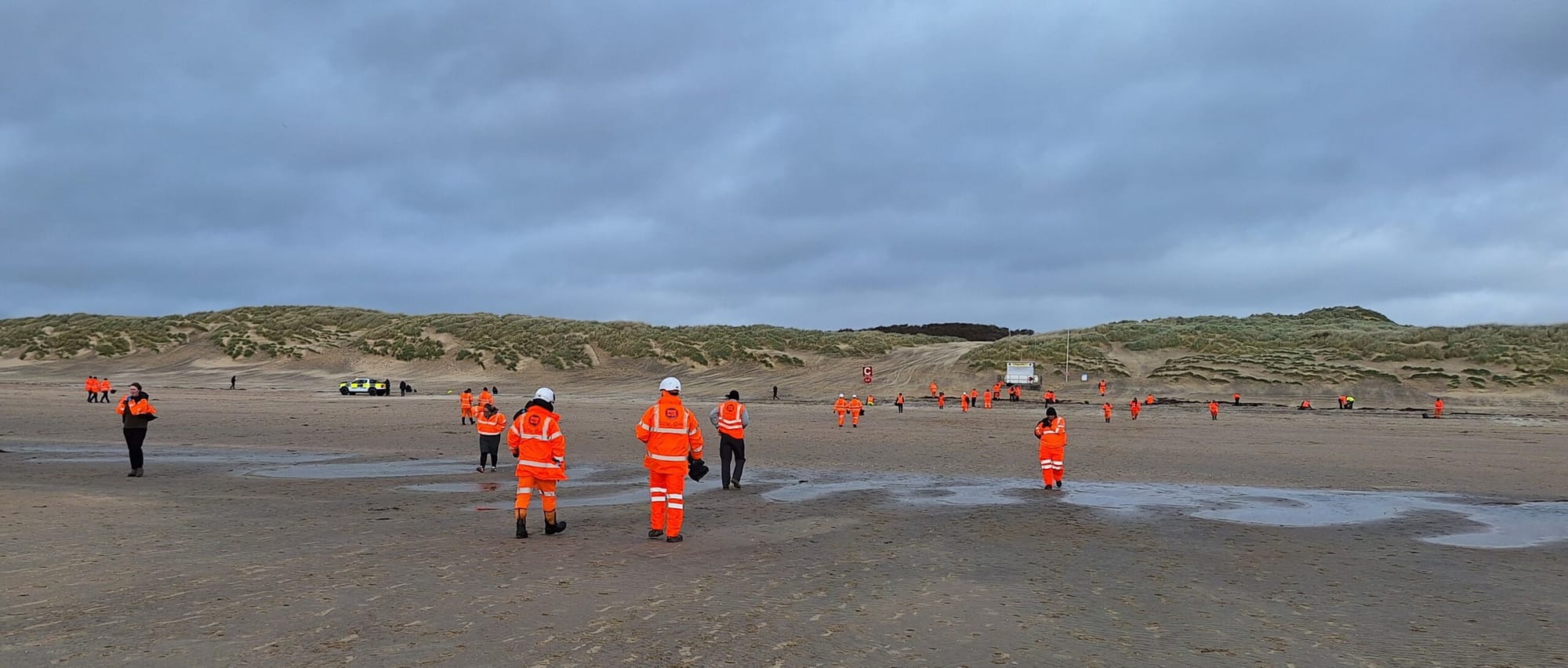
A clean-up of the pellets began on Friday 7 November, organised by Rother District Council coastal officers and Strandliners working with local volunteers and the non-profit organisation Nurdle. They supplied a large specialist suction machine to remove the beads, along with smaller hand-held equipment.
Joshua Beech from Nurdle said it was one of the worst pollution incidents his company had helped clear up. "It's horrendous and will be an ongoing project for quite a few years."

Strandliners, the East Sussex citizen scientists who gather evidence on plastic pollution, have also been investigating the cause of the incident and have called on people to report any sightings of newly washed up beads in Camber and on other South East beaches. They say as Southern Water have not given an exact amount of the beads lost it is not known how many are still at sea and waiting to be washed ashore.
On the discovery of the beads, calls went out on social media from Camber Community Information and other local groups for volunteers to go to the beach with rakes, dustpan and brushes, and latterly, sieves. These volunteers far outnumbered those sent by Southern Water, whose response has been severely criticised as "inadequate" by those involved in the clean-up.
Many beads could be seen along the tide line, caught in seaweed and in the sand. Volunteers raked the seaweed to uncover hidden beads and because of their small size they used brushes or worked by hand to collect them. The beads cover a huge area and are also being buried in the sand.
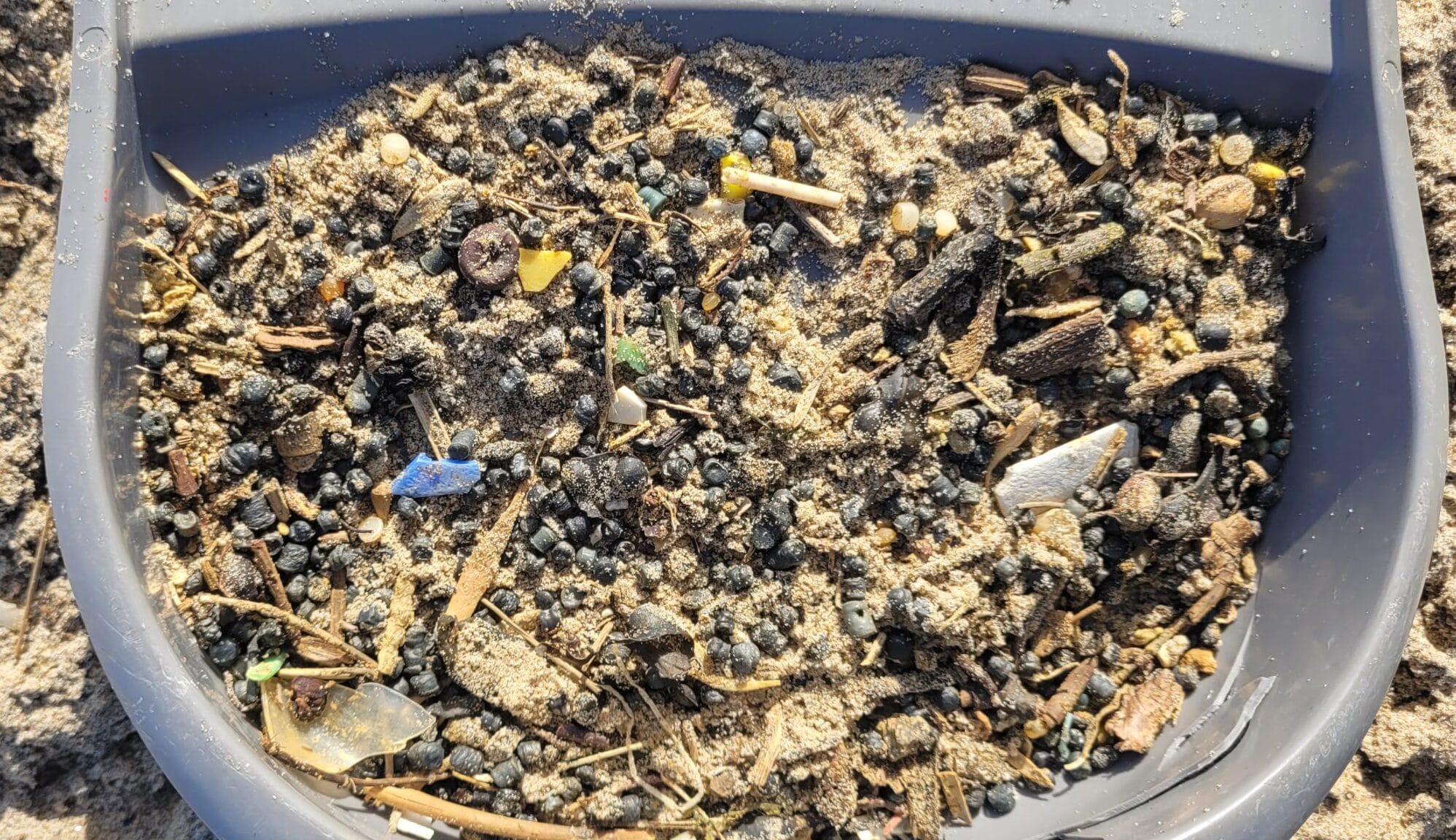
On Monday 10 November Southern Water admitted responsibility “After completing the initial stages of a thorough investigation, which is continuing, we believe it is highly likely that the beads have come from our Eastbourne Wastewater Treatment Works. We’ve identified a failure of a screening filter which has apparently led to beads used in the treatment process being released into the sea during heavy rainfall. The screen should have prevented this occurring.
“We are very sorry this has happened and are doing everything possible to investigate and resolve the problem. We’ll provide further updates as soon as more information becomes available.
“Southern Water continues to work closely with Rother District Council, which is leading the clean-up efforts, and we remain committed to supporting this work in every way we can. Southern Water volunteers will continue to assist. Our staff are here to help, and we ask that they are treated with respect as they help with the beach clean.”
Helena Dollimore, MP for Hastings and Rye visited the scene on both Friday 7 and Thursday 13 November to thank the volunteers and groups involved in the clean-up. In a strongly worded statement on Monday 10 November she called for "an independent investigation into how this spill went undetected for so long and why a company with such a long record of environmental negligence once again failed to act responsibly. Southern Water cannot be trusted to mark their own homework."
As a response to continued pressure from Ms Dollimore, and to the national media coverage, Southern Water agreed to assist in the clean-up and on Tuesday 11 November sent 50 staff members to work alongside Rother District Council coastal officers. Southern Water have also agreed to independently test the beads and to report back on what is found. They will also commission an independent investigation as to how the beads were spilled and why the company did not know about it.
An Environment Agency spokesman said, "We acknowledge that Southern Water has admitted responsibility for the pollution incident at Camber Sands, in a statement released this morning. This is an active investigation and we will not hesitate to take robust enforcement action where appropriate.
"The Environment Agency continues to work closely with Rother District Council, which is leading the clean-up of plastic pellets, and other responders. We remain ready to help if needed.
"We encourage anyone with information on this incident to report it to the Environment Agency’s 24-hour incident hotline: 0800 807060."
Rother District Council are continuing to coordinate the clear-up which will be ongoing 7 days a week until further notice. All volunteers are asked to report at the Camber central car park at 10am for a briefing, and to bring dustpan and brushes and sieves.
Council leader Doug Oliver thanked his team for their very quick response to the incident. "I’m also grateful to all the local volunteers who continue to give up their valuable time to support the clean-up operation. However, in order for them and our officers to continue their huge task, they need further specialist equipment and support. We are now in talks with Southern Water to see if some of this equipment can be delivered to Camber as soon as possible.”
An updated statement from Southern Water on 13 November gave further information on their investigations into how the bio-beads left their Eastbourne works. "Our teams have been working on site, including draining a large tank over the past 24 hours. We've found far more beads remaining in the system than expected. This means fewer beads - less than 10 tonnes - entered the sea.
"We've updated our tidal modelling to understand how these beads may have moved after leaving the site. This will guide our ongoing clean-up work with specialist contractors."
People who wish to attend the meeting organised by Helena Dollimore on Thursday 13 November at 7pm, which will include representatives of Southern Water, are requested to register at www.helenadollimore.com/plasticbeads. Once registered an email will confirm your place and the location of the meeting.


