


Covid-19 has driven a surge in free school meal registrations but, with half term under way, thousands of children across the South East are at risk of going hungry because free meals are "normally only provided during school term-time”. This is despite the government’s policy to provide free school meal provision during the last summer holidays.
While the debate raged in parliament, the government claimed that it has already given funds to local authorities for Covid related community support, but the position is far from clear. The chancellor says “the government has already given money to councils in England for free school meals in the holidays" and he went on to say that they are "absolutely committed" to making sure vulnerable children do not go hungry.
So what is the position? The government says that money for free school meals is covered both by the benefit system and separate allocations to local councils. But we know that the benefit system has a built in delay of five weeks or longer and the Covid allocations of government money to the local level are comparatively small.
In East Sussex, most of the large sums were committed within 12 weeks to help fund the fifteen foodbanks; to provide small grants to organisations that work with food bank users such as the food box delivery; to develop local food partnerships to ensure long term sustainability; to fund vouchers to people in food poverty via Citizens Advice and to provide communication.
Free in term time
Free school meals in term time are provided per head for those registered students of families on Income Support; Jobseeker’s Allowance; Employment and Support Allowance; on State Pension Credit; Child Tax Credit and with low incomes, and those who stop qualifying for Working Tax Credit and for immigrant programmes.
But when the holidays come, responsibility falls back to the family. As poverty does not cease in the school holidays, many believe that funding for free school meals should be available all year round, to ensure support for vulnerable children. With Covid-19 on the rise, the situation for many families experiencing food insecurity is worsening.
[Editor's note: But our local MP has a different view, though the facts are worrying].
Autumn and winter bring increased heating and lighting costs, putting household food budgets under even further pressure. Of course we are reminded that there are county wide helplines and websites for formal requests for assistance, but for some they present a challenge too far.
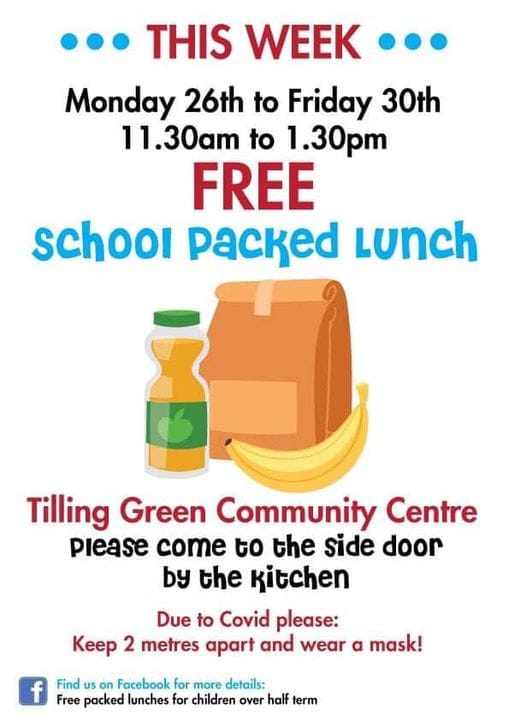
So this week, while the talking continued, members of the community stepped up to deliver. Individuals like former councillor Gemma Blumire organised food from the Tilling Green Centre. Several local businesses, including the Borough Arms, the Corridor Cafe and the Winchelsea Lodge offered food packs. The Rye Food Bank under newly installed honorary freeman Chris Emson continued its deliveries at pace. Much of the funding has come from donations.
What about the future? REACT, Rye Mutual Aid and Rye Food Bank have all the contacts with partners to help provide further local support. We are in touch with the most involved, but resources (time and money) are limited. For the immediate future there will be enough to go round, but Christmas is on the horizon and if government policy does not change then we will see a repeat of the earlier situation.
To avoid a bleak Christmas for some of the most vulnerable, various initiatives are being considered to help. If you can spare anything then please donate to the Rye Food bank, open each Wednesday lunchtime at Rye Baptist Church.


