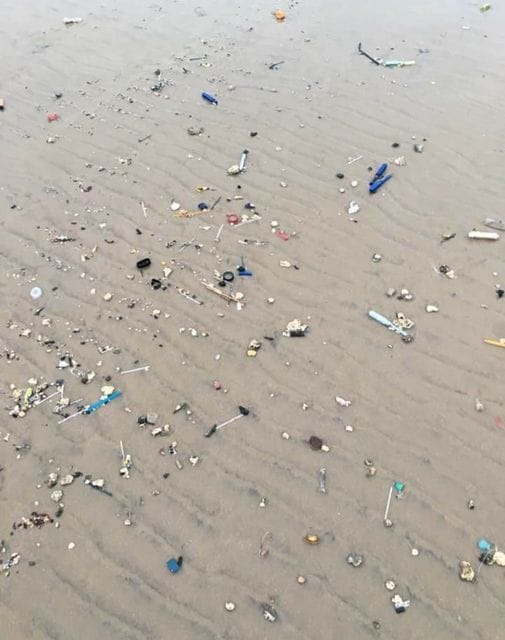
Over last weekend there were multiple reports from local beaches between Hastings and Camber indicating significant amounts of “sewage related debris” deposited at low tide, and the debris included plastic items such as ear buds, tampon applicators and syringes.
First reports from beachcombers and walkers started last Friday and this type of pollution is not only very unpleasant for those who encounter it, but increases health risks to both humans and wildlife.
So how does this pollution happen? Having made reports to investigating officers of the Environment Agency, it was explained that there should be no pre-judgement as one possible source was from shipping in the Channel. But, while it is often difficult to identify the precise source, the quantity and type of material found last weekend does point to a possibility that has been highlighted in earlier stories in Rye News.
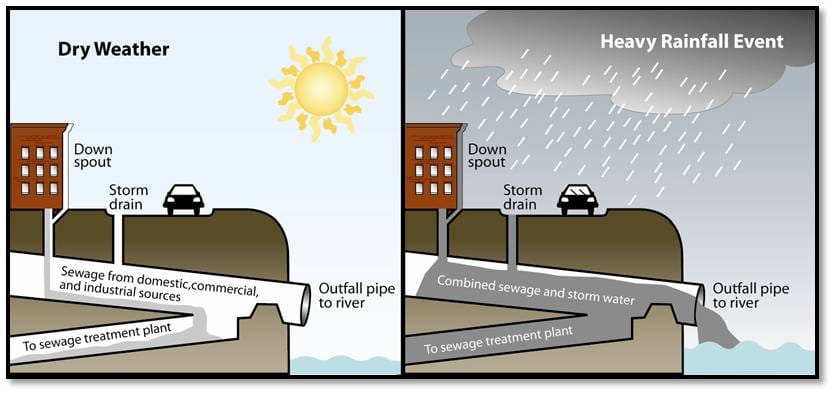
There is an aspect of flood risk that is often overlooked which is that the privatised water companies operate a combined sewerage overflow (CSO) system in their treatment plants along the south coast and (see diagram), generally sewerage systems combine rain water runoff and sewage in one flow.
This is pumped from source to the treatment plants and under normal conditions the system tends to cope with flows, but in periods of extreme or extended periods of rainfall – now occurring more frequently, as we saw last week - the large quantities of rain water runoff overloads the system and can cause spillage at any weak point - often around pump locations.
In addition when the flow reaches the treatment plant, if quantity exceeds handling capacity, the excess is diverted through basic filters directly to outfall into rivers and across beaches. The flaws in the CSO system are well documented and have been raised at the Southern Region Flood and Coastal Committee (SRFCC).
Southern Water has said that "the (CSO) release 'underscores' the risk of flushing 'non-flushable waste'. These items, including plastic waste, can get caught in sewers and drains which cause blockages and can lead to internal flooding of businesses and homes."
All spillages should be reported
However without huge investment, early solutions by the water companies are unlikely. Future housing and employment development only adds to the load on existing systems and, with more extreme rainfall events, the future situation will only be aggravated.
It should be said that, because of health risks, it is very important that all sewage spillages are reported immediately, photo evidence is helpful, to the Environment Agency on their incident line 0800 80 70 60. Rye Emergency Action Community Team and others like Rye Bay Beachcombing and Strandline did so for the pollution event last weekend and we wait to see what emerges.
TV programmes such as Blue Planet have highlighted the risks from plastic in the oceans and seas so we should all be aware that anything put into sewers, particularly in coastal places, could end up in the sea. Therefore, please dispose of sanitary material responsibly and safely and please do your bit to ensure that you bear no blame for polluting our beaches.