Scallops. Or is it “Scollops”? However you may pronounce them … I always choose scallops from a menu in a restaurant. I love the richness, the meatiness, the sweetness of them. Rye scallop festival will be held the week of 17-25 February. It includes special events, as well as scallop-focused menus in so many of our restaurants and pubs.
Scallops can be caught throughout the year, but our fishermen of Rye limit the season to ensure their numbers are managed. Rye’s scallop season starts in about December, and can last until April.
According to the Rye Fish Market, there are three boats so far this season which have been fitted to fish for scallops, Princess, Maverick and Mizpah. More boats will be equipped as the season progresses. The equipment includes two long poles with 4-5 netted rakes on each pole. It can take all day to fit the boats with this equipment. These poles follow the seabed to rake over the surface and collect the scallops. The scallop beds lie very close to Rye, but boats must not gather scallops closer than 3 miles from shore. On June 1, this change to 6 miles.
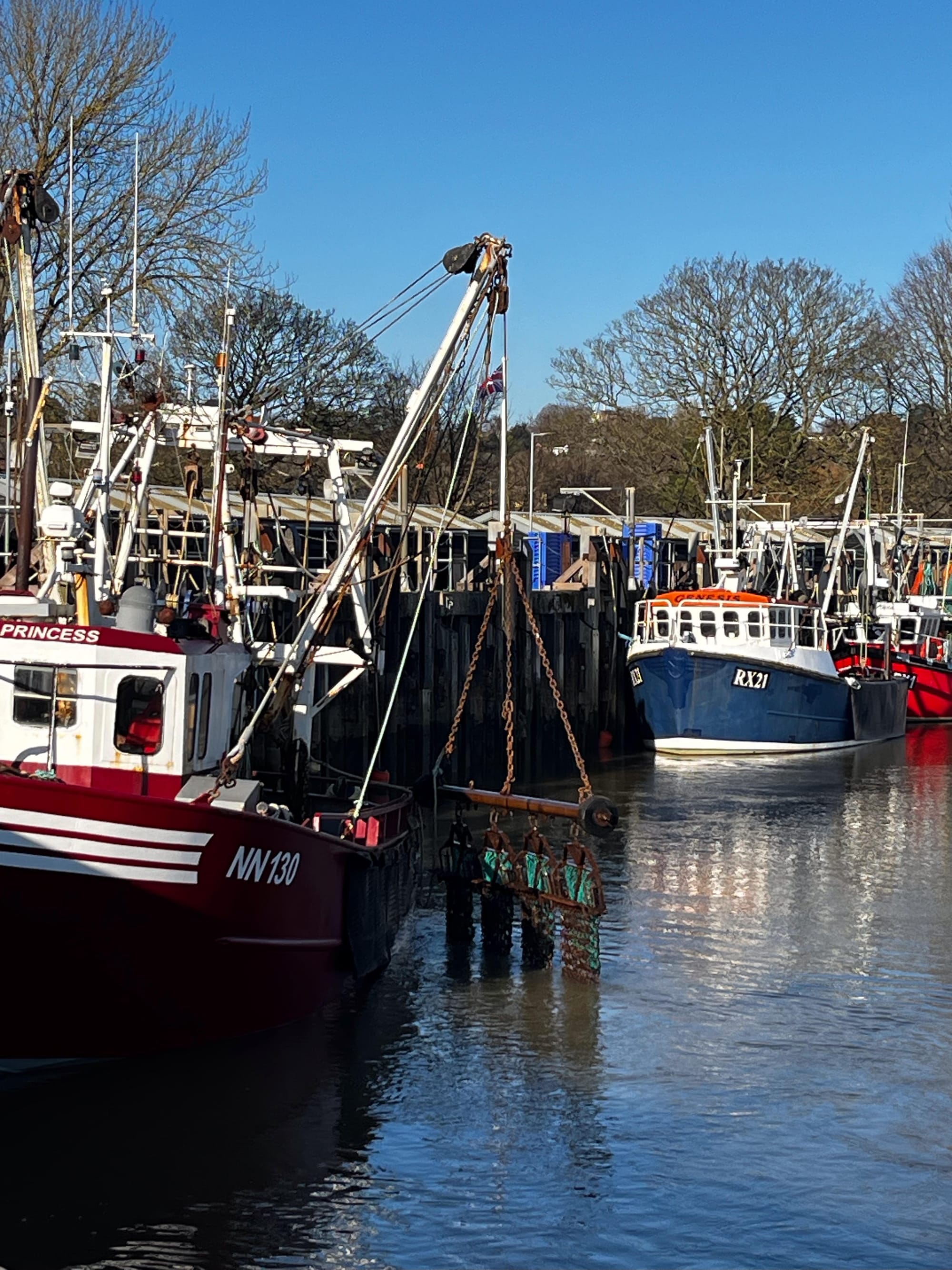
Fishermen keep the exact locations secret, to try to manage the annual dredging, protect the grounds and therefore ensure sustainability. Testing is done on the catch to ensure purity and health according to health and safety guidelines. It can cost about £500 in fuel each time a boat goes scallop fishing – because of the extra effort to lift up the scoop arms from the seabed. Therefore, boats go out for at least 12 hours at a time, sometimes 24 hours. The boats of Rye are very small with one person doing all the work. In comparison, the larger, usually European, trawlers have huge rakes and they are able to literally dredge a seabed bare and catch hundreds of tons of scallops each time they lower their dredging equipment into the sea.
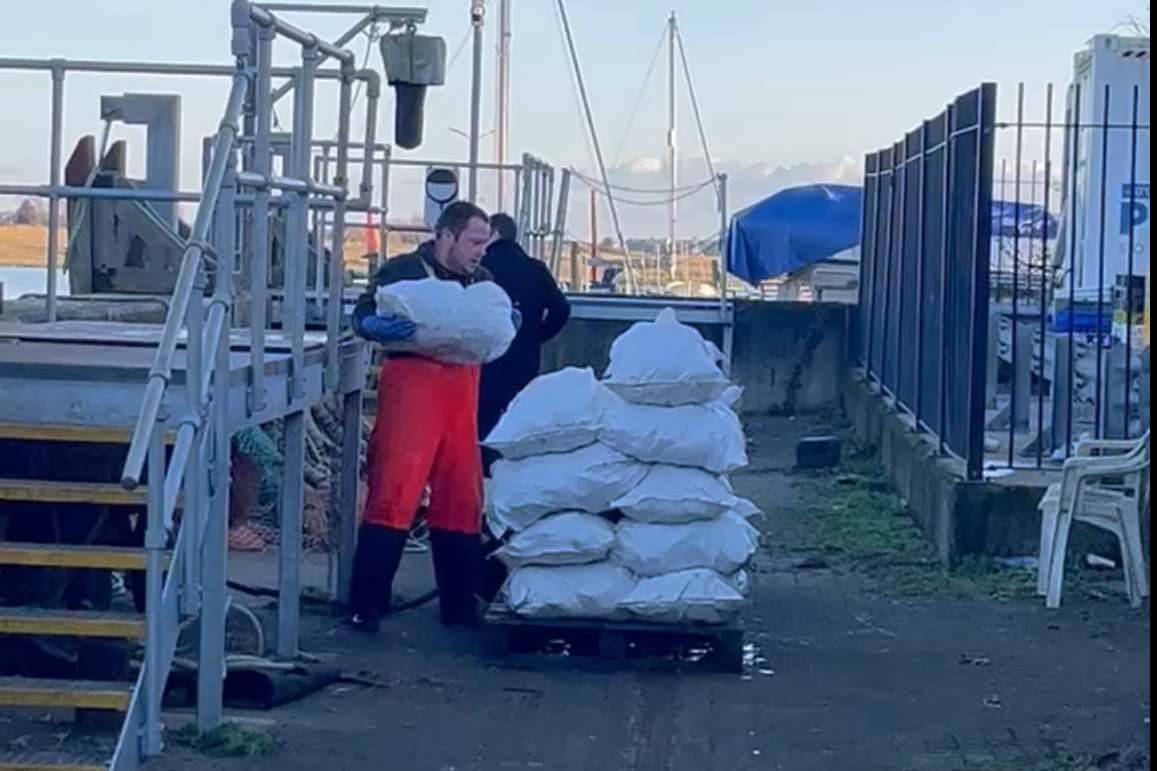
Rye fishermen have all found that making a livelihood is particularly difficult this year. Whilst fishing is ok in wet weather, the amount of windy weather we have had over 2023 has reduced catches by over 50% in many cases.
As you enjoy Rye Bay scallops, ask the local restaurants if they are, indeed, the local product! Some restaurants even provide the name of the local fishing boat which has caught them.
If you want to buy and cook your own scallops, expect to pay between £1 and £1.30 each for the local Rye product. Scallops are sold with the orange coral “roe” attached. Some people love to eat this, but often it is cut from the main scallop and only the white muscle is eaten. People can be intimidated by how to cook them, so I am including a simple recipe, including how to test if they are cooked through. But ... the ones caught off our coast in Rye are so fresh, they can be eaten “ceviche,” cut thinly and then allowed to marinade in lime or lemon juice and eaten raw- safely and easily.
Recipe: Scallops with black pudding (pre-sliced) and pea puree.
1. Cook the peas and mash them up with a little vegetable stock or crème fraiche into a creamy paste. You can add fresh mint too.
2. Pan fry the black pudding in a little oil or butter- about 1-2 minutes each side until browned. Remove and keep warm.
3. Clean the scallops and pat dry. Heat some butter in the pan you have used. When the butter is sizzling, add your scallops. Wait until the bottom side is brown – about 2-3 minutes max. You should feel the scallop with a fork on top – it will begin quite wobbly in feel, but will get a little firmer. I add pepper and a pinch of salt to the top of the scallops at this point. Don’t wait until the scallop has become firm – this overcooks them and they can become quite rubbery! Now turn them over and brown the other side -1-2 minutes. About 4-5 minutes total frying for both sides should be fine. You will find they have become just opaque, but still soft and easy to cut with a knife. The biggest mistake we make is being afraid they are raw and cooking them too long!
On plates, make a little circle of pea puree, then add a slice of black pudding, and then add perhaps 3-4 scallops per person on top of this.