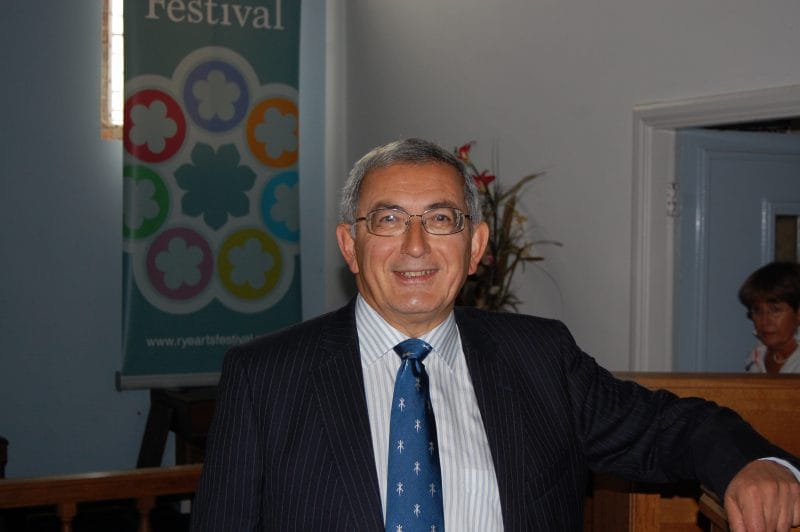
In a three part series on the coronavirus outbreak Dr Andrew Bamji (pictured) writes first about the history of the outbreak to date and then in the two following parts he answers the most asked questions about the outbreak, updated to take into account any new developments.
Since I adapted my “Pandemic Polemic”, written about the swine flu epidemic, to fit this year’s coronavirus outbreak, a lot has changed. In Rye, the shops are shut and the streets relatively deserted; social distancing has been (largely) observed and many households have isolated themselves. Has it been worth it, or was my suggestion right that SARS-CoV-2 infection would for most be no more than a cold?
If you have been reading my blog (https://bamjiinrye.wordpress.com) and have started at the beginning you will see that I was partly right and partly wrong. Most people who are infected appear to have a mild illness, or none at all. However the virus is highly infectious and some people develop a severe illness, Covid-19, which results in lung failure and death.
The government has based its plans on “The Science”, but The Science thought originally that SARS-CoV-2 was a slightly nasty form of flu. But it’s very easy to see where things went wrong, and right, with hindsight. In medicine we call this the retrospectoscope, which is infallible. Dealing with something that is completely unknown is not easy. Watch “Chernobyl” on Sky or Amazon Prime to see an example of how an unforeseen technical issue can cause catastrophe.
"Science is not infallible"
Before I analyse what has happened so far I must point out again that science is not infallible. Back in the 1960s the professor of biochemistry at my medical school reminded each year group that the half-life of scientific knowledge was about six years. After which, he said, that means that half of what I have taught you will have been shown to be wrong. But we don’t know which half.
Scientific research is prey to many problems. There may be too many possible causes for something to be able to separate them out. Trials may be biased because inclusion criteria are skewed; thus, the trials of an anti-inflammatory drug, Opren, failed to detect a potentially fatal build-up of the drug in older people because the trials didn’t include older people.
Some trials fail to include dropouts in the analysis. The trial analysis may be faulty; the wrong statistical tests are applied. The tests used may be flawed; a lot of work was done in the 1970s looking at the glandular fever organism, the Epstein-Barr virus, as a cause of rheumatoid arthritis until it was shown that the positive results were due to a contaminated assay.
The trial may be too small; if a drug works a bit, you need a much larger trial population to prove it than if its effect is stupendous. Data analysis can be selective so the conclusion fits the hypothesis, as with fat and heart disease. Or there may be deliberate fraud, as with the investigation of a link between measles vaccination and autism. All of these factors conspire to change facts, let alone treatments in medicine.
"Stopping the NHS from being overwhelmed"
In the case of SARS-CoV-2 it was apparent at the beginning that people were dying from respiratory failure, and those with medium-term memory will recall that the initial measures put in place were to stop the National Health Service from being overwhelmed. This aim was achieved, even without recourse to the amazing construction of the Nightingale hospitals, which have admitted barely 40 patients instead of the thousands expected.
From an epidemiological viewpoint, isolation and prevention of transmission by social distancing were very important. They too have succeeded in limiting spread, though at a cost. But there were some mistakes.
Now we know how infectious the virus is, it was in retrospect a mistake to allow the Cheltenham race meeting to go ahead and a serious mistake to empty hospitals of care home residents without testing them before discharge.
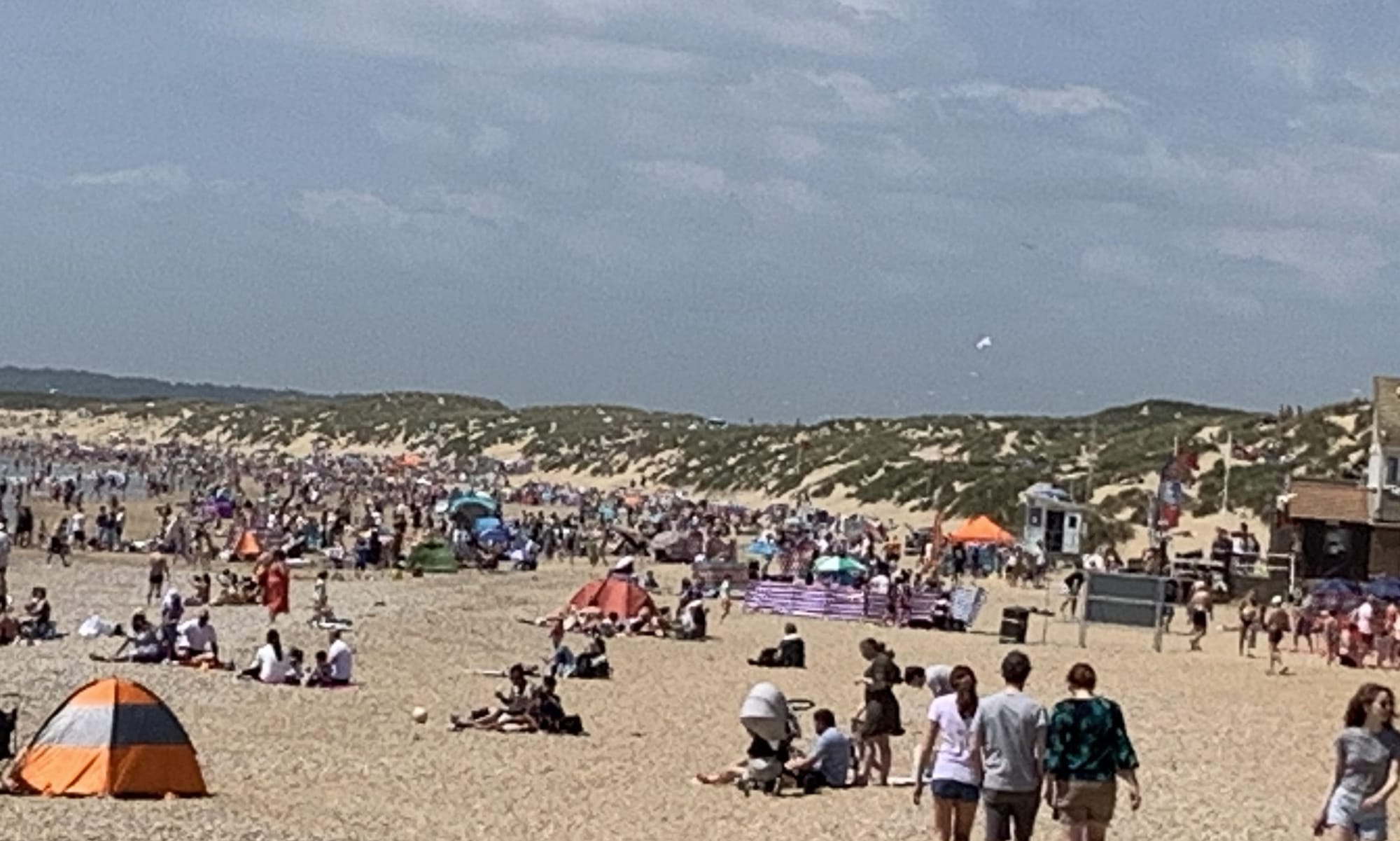
I know that many people dispute the value of a lockdown; however, there is no doubt it limits infection, so I don’t. But it was always clear that releasing a lockdown would be problematic; people would go back to normal (not even new normal) and crowd beaches and demonstrations, and we have seen that in Rye.
"Government's briefings ... became formulaic and boring"
The government’s briefings were excellent to start with, but became formulaic and boring. We watched initially, but have given up. What facts were presented were presented well, but there were gaps and from a clinical viewpoint there was almost no explanation of what happened to people at the serious end of the disease, Covid-19.
All we got was BBC reporters making emotive visits to intensive care units. This is a pity, because it would have underlined the potential catastrophe for individuals who suffered it, but would also have highlighted the uncertainty of "The Science" – important, because the way deaths are reported daily give a sense of certainty. The total is provided with great precision, to six significant figures, but this does not guarantee accuracy.
The media has fuelled fear, of that I am in no doubt. Every decision has been questioned and criticised. Every plan has found its (often vocal) critics. As an example, when it was announced that testing would be “ramped up” to a daily capacity of 100,000 cold water was poured on the plan; it was impossible.
As the deadline drew nearer there was increasing excitement that the government would fail. Failure was not just expected, but would be greeted with glee. It didn’t fail.
Everything went very quiet until the media found something else they could tear to bits. It was not edifying; from a personal viewpoint I found it quite depressing, as I tried on several occasions to engage sensibly with journalists but had no reply, I suspect because my analysis did not fit with what they wanted to hear. Was my news fake, or was theirs?
Next week : So what questions might one ask, rather than repetitive and critical ones about testing and PPE?