


Sussex Community Foundation’s latest report on poverty in Sussex is grim reading - and this is before we see the full effects Covid-19 will have inflicted on the local economy. 21% of children in Rye are living in poverty, which is 4% higher than the national average and 8% higher than the Sussex average of 13%*.
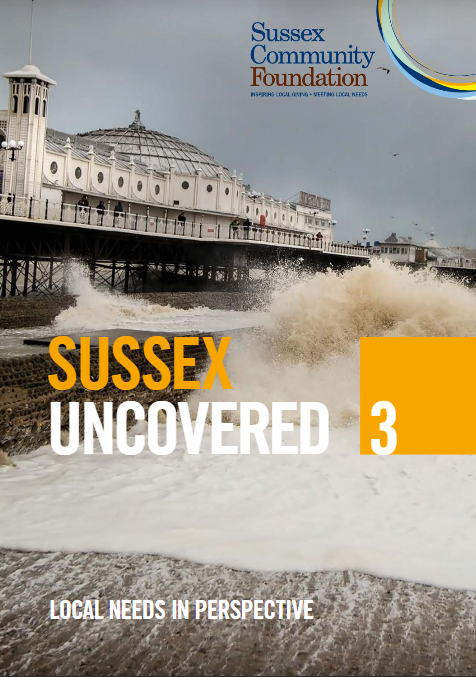
The report, entitled Sussex Uncovered, aims to tell the story of the needs and strengths of our communities across Sussex.
For the first time, the data behind the statistics have also been published which allows you to get a detailed overview of Rye, its population breakdown and the employment opportunities within the town.
Sussex Community Foundation published the report, ‘for anyone who wants to understand Sussex better – philanthropists, individuals, charities and community groups and local authorities.’
They go on to say, ‘we hope that it will provide evidence of local needs against which to plan your work or to put your case for funding. We also hope it will demonstrate the vital importance of local philanthropy and local communities and inspire a new generation of people to give locally.’
The foundation’s key finding from their research is that Sussex is a great place to live - if you can afford it, and there is substantial inequality in all areas of life with many people in the county struggle to get by on a day-to-day basis.
In Rye, the report estimates that 25% of the population are living in neighbourhoods that are ranked in the bottom 20% of most deprived in the country, as defined by the Index of Multiple Deprivation (click here for a simple explanation of how the government calculates the Index of Multiple Deprivation).
The data underpinning the report highlight Rye’s reliance on the tourist trade and visitor economy for employment. Hotels and catering are the largest sector in Rye and employ 28% of all people in employment. Retail is the second largest sector and employs 12% of people in jobs in Rye.
Many of the data in the report will have been superseded by the crisis that has been created by the Covid-19 lockdown. The Food Foundation's recent research estimates that 3 million people in Britain are going hungry because of the coronavirus crisis and their research shows that the stark drop in income has pushed many families into poverty during the lockdown.
The disappearance of the tourist trade in Rye has further compounded the drop off in the wedding trade since the fire at The George last year. Businesses in hospitality and retail were already feeling the effects of The George's closure and only time will tell how quickly the tourist trade and visitor economy will bounce back once travel restrictions have been lifted.
Facts & Figures
Other interesting facts and figures contained in the Sussex Community Foundation’s research include:
- Age profile: Pensioners make up the largest population group in Rye making up 34% of households, higher than the national average of 21%.
- Ethnicity profile: Rye isn’t a particularly ethnically diverse town with 95% identifying themselves as White British, which is considerably higher than the national average of 80%.
- Housing profile: 5.2% of homes in Rye are ‘second homes’, which is considerably higher than the national average of 0.6%. In addition, 13% of houses in Rye are classed as ‘vacant’ compared to 4% of the country’s as a whole. Though the term ‘vacant’ is a bit misleading because it refers to ‘households that do not have any usual residents’ such as holiday lets.
- And what won’t come as much of a surprise is that Rye’s housing stock is older on average than the rest of the UK’s. 29% of housing stock was built before 1900. The national average is 16%.
- Car ownership: What is surprising, considering the level of debate around parking in Rye, is that 27% of households in Rye do not own a car.
The full report can be read here and the deep dive into Rye can be found here.
*Sussex Community Foundation: ’The children in poverty measure shows the proportion of children (aged 0-15) in families in receipt of out of work benefits, or in receipt of tax credits where their reported income is less than 60% median income.’


