


Glasgow featured recently in the world press as hosts of the International Climate Change Conference, COP26, which included participation of around 30,000 delegates representing 197 countries, the agenda, to explain how they will implement their plans to cut emissions by 2030.
The COP was seen by many as the last chance to keep the global temperature increase at or below 1.5 degrees Celsius by 2010 which, if achieved, would help to minimise the worst impacts of climate change.
CO2 emissions must be reduced if we are to slow down the effects of climate change and we can all play our part in achieving the targets set as our future depends on it.
Leading from the front and setting a fine example is our very own Rye, Winchelsea and District Memorial Hospital whose aim is to reduce its carbon footprint by as much as 98%, a process which is expected to save a significant 87.2 carbon tonnes per year through the removal of gas.
The hospital has a decarbonisation plan and has appointed property maintenance specialist DMA Group, a company with specialist knowledge and experience of supporting hospitals and the public sector using its unique computerised maintenance management platform, to design and deliver energy saving measures across its site in Rye.
The whole two-phase process is being expertly managed by Martyn Phillips, chief operating officer on behalf of the hospital, whose wealth of experience in this field will insure the objective is realised when phase two is completed in July 2022.
Phase 1 involves the installation of solar PV panels (see photo) to generate 69,500 KWH of carbon neutral electricity, this process should be completed by the end of this year. The current annual electricity cost is around £22,000 but by producing electricity through the solar panels this figure is estimated to be reduced by £12,700 per annum.
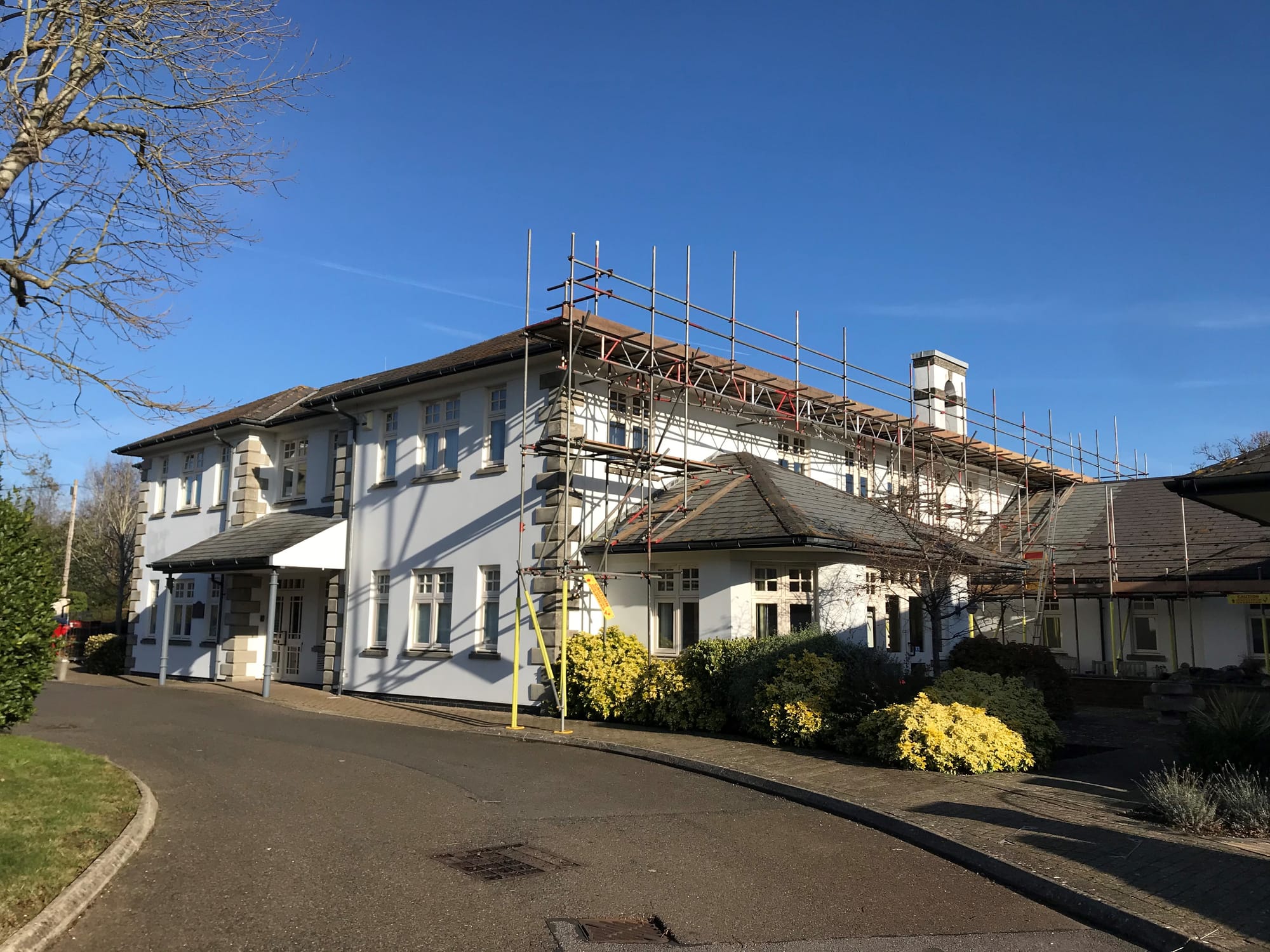
LED lighting is being introduced throughout the hospital, reducing electricity usage and the longer life lamps will reduce maintenance costs.
Phase 2 includes the installation of air source heating to replace the gas heating system. Currently, the annual cost of the gas is around £24,000 with an annual consumption of 475,000 KW hours. The proposed gas usage on completion is zero KW hours resulting in a saving of 100% from August 2022. The gas appliances in the kitchens will be replaced with efficient electrical appliances and the natural gas supply will be terminated and removed.
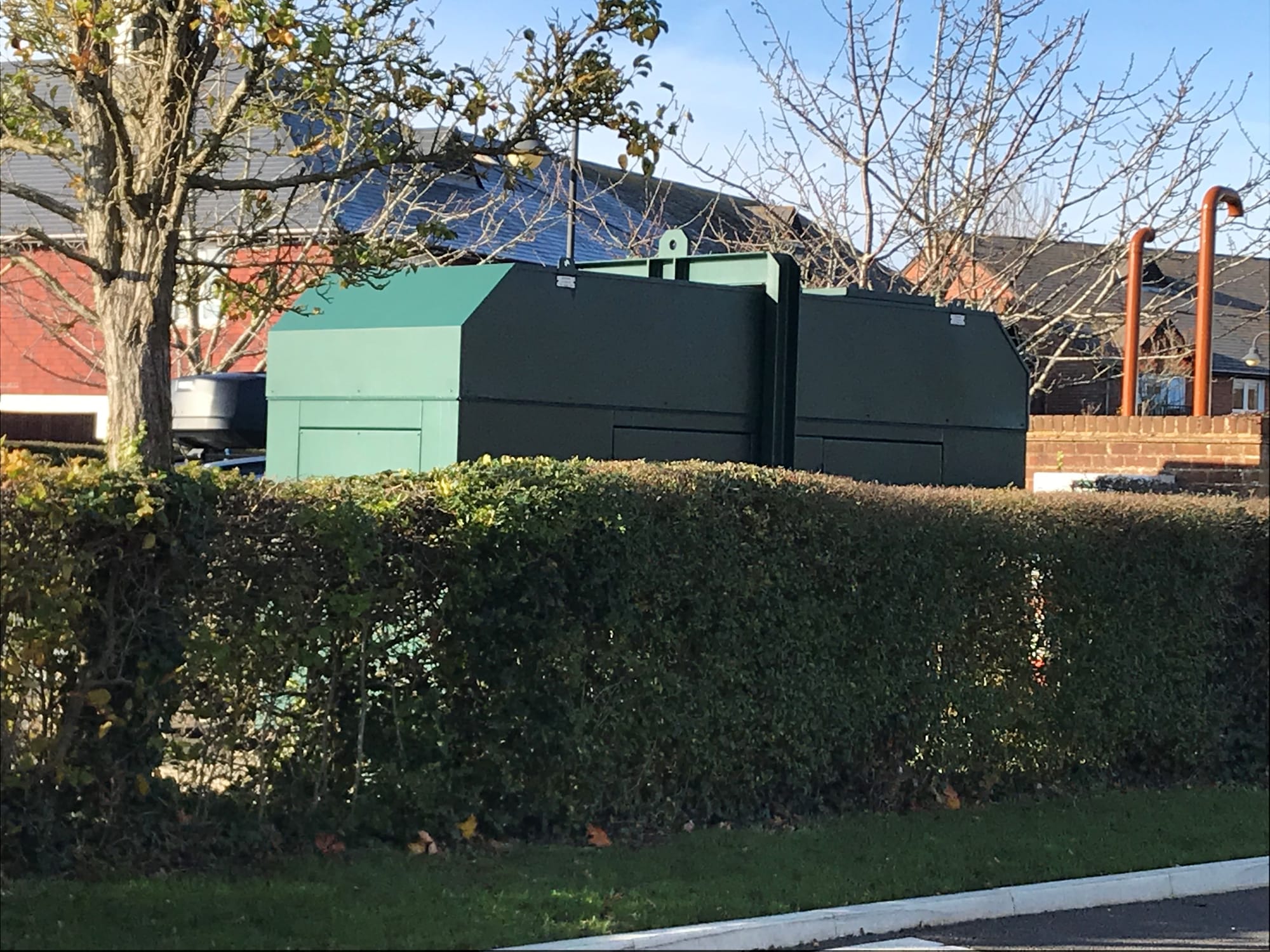
Thankfully, chairman Barry Nealon and his board members have made provision to cover the costs of all the required improvements by building a contingency fund to future-proof the hospital and in the highly unlikely event that the hospital is effected by a power outage the patients will not be effected as an emergency generator is already in place and regularly maintained and tested as a fail-safe back-up, if required.
When I met Francesca Clent, company secretary and Martyn Phillips at the Hub on Rye Hill, it was clear that this ambitious plan is not just a pipe dream but fast becoming reality and by the summer of 2022 should be complete. By which time, Rye, Winchelsea and District Hospital will be the first carbon neutral community hospital in the UK, an amazing achievement and a shining example of what can be achieved with careful planning, commitment, purpose and team work.


