


As Rye News reported last week a planning application has been made to build houses on a strip of land between the railway line and the fire station and the telephone exchange in Mill Lane.
This will be discussed by the full town council next Monday 27 January, rather than just by the planning committee, and detailed comments have been circulated from Anthony Kimber, vice-chair of the Rye Neighbourhood Plan Steering Group.
Mill Lane is on the other side of the road from the junction by the level crossing in Ferry Road, and faces the Queen Adelaide pub, to be demolished when the Lower School site behind it is developed for housing.
That large development has been approved by Rother District Council (RDC) subject to various details - and the devil may be in that detail (as it might be with these new proposals on the other side of Ferry Road).
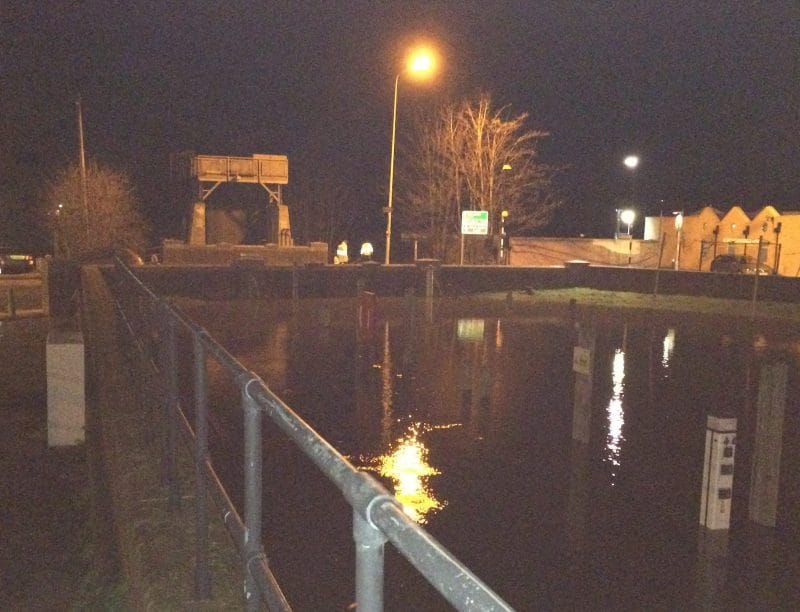
Rye is at risk of flooding because much land is below sea level, which is why there are tidal gates on some rivers and other defences.
In the case of the large Lower School development this was to be dealt with by trucking in loads of earth to raise the ground level, which meant a lot of lorry movements - and this was among the details RDC had to sort out.
This new proposal will also face flooding concerns, but a bigger concern is that it is by this junction near the level crossing which may be used by construction traffic to the Lower School site - as well as by fire engines and the normal traffic (which includes long distance lorries cutting across country to reach the Channel ports).
So a junction which is already extremely busy faces a big increase in potential traffic from more than one direction - possibly even requiring traffic lights.
Parking may also be an issue (and could be a headache for the Fire Service) but the bigger issue could be that junction, serving both developments as well as the fire station, in Ferry Road.
It is already incredibly busy and logjams form very quickly, not just when the crossing gates are closed, but also when a van is parked on the roadside, or because of those trying to get into or out of the nursery school or health centre.
And there is also the issue, with climate change, as Anthony Kimber points out, that floor levels are being allowed on the Lower School site by the Environment Agency below the exceptional high tide level Rye experienced in December 2013.
So there are a number of good reasons for the council to consider this carefully.


